Category: History

Saturday Night In Paris: A Short Trek and Sean Penn. Seriously.

“Paris is the only city in the world where starving to death is still considered an art.”
― Carlos Ruiz Zafón

After a gorgeous day at Versailles, we convened at Katie and Adam’s quite-nearly-as-gorgeous-and-only-slightly-less-gilded hotel room to pick a place for dinner. It was a bit late in the day to be sorting this out but Katie (as ever, the best travel planner I have ever had the pleasure of frolicking around a major European capital with!) had already created a whole list of recommendations and hot spots. We settled on a restaurant that sounded promising and, after trying and failing to make a reservation online, got the brilliant idea to ask the concierge service to make a reservation for us since we figured a top-notch restaurant would be more willing to accommodate the request if it came from the front desk of the Le Meurice hotel rather than tourists. We we right. We know our cultural limitations, and how to work them, kittens.

Reservation made we made the trek across the river, found the right area, and then got a bit lost since we’d marked the address on a map but believed that we left Katie’s all-important list in the hotel room, containing the precise address. As it happened, we found the list the next day. In my camera bag. (Thunks head on her desk. I’m wincing just remembering it. Carry on, I’ll meet you at the next paragraph.)
 photo lecoupechou_zps0d0fcbe8.jpg

Anyway, we were late for our reservation, but managed to find the joint Le Coupe Chou, which might be one of the most ambiance-rich place I have ever had the pleasure of dining in. I’m not surprised we got a bit lost, really. We were in the Latin Quarter, the old medieval heart of the city. The ruins of the Abbey of Cluny (once the largest building in the world, and the site where the Crusades were first kicked off a thousand years ago) was a mere stone’s throw away.

Don’t let the humble exterior lull you into a false sense of security, Le Coupe Chou is fearfully and wonderfully made within! In it’s 17th century past it began its current incarnation as residential spaces, which means that you have to be led through multiple rooms and levels of dining, drinking, and lounging spaces to get to your tables; complete with old wooden stairs, knocked through stone walls, heavy stone fireplaces, delftware tiles, and dark timber beams in the ceiling. The effect is very cozy and elegant at the same time.

Apparently both medieval and Roman site elements were discovered during upgrades and renovations. Which doesn’t surprise me in the slightest, it’s rather par for the course in a city as ancient as Paris, but excites me all the same. The remains of a 16th century well can be found in the basement along with 12th century pottery, and a piece of graffiti from the Revolution has a place of honor behind the bar. My little history heart was melting with contentment.

Late as we were, we were shown to our table and got to peruse the menu and talk all we wanted while waiters kept the bread and courses coming. Jeff chose best with the veal, by the way, which we both heartily recommend. At one point Adam excused himself from the table and when he came back, he was wearing an expression of complete delight masked by false nonchalance – a sort of widening of the eyes with the corners of the mouth turned up ever so slightly against his will.
“Guys, I could be wrong, but I’m pretty sure Sean Penn is sitting three tables away.”
Naturally this meant that throughout the evening (spaced well apart) we all excused ourselves to confirm or deny the news.

And team it’s confirmed. I googled it later, just to verify we weren’t blinded by the Romantic lights of the city (or perhaps still slightly winded from our dash to find the restaurant in the first place), but yes. Sean Penn was in Paris, and he was definitely sitting thirty feet away from us that evening. More googling later informed me that other notables to have dined at this spot include Brigitte Bardot, Marlene Dietrich, The Beatles, and most of the great and good of French theatre over the last half century.

I herewith surrender any rights to complain about my life being uninteresting for the next six months at least. If I do, minions are encouraged to slap me across the face.

A Day At the Palace (Or All Gold Err’thang: A History Lesson)

“Marie-Anoinette: This is ridiculous.
Comtesse de Noailles: This, Madame, is Versailles.”
– Marie Antoinette, 2006

The palace of Versailles is just a hop, skip, and a half hour train ride outside of central Paris in a way that belies the income, cultural, and geographic divides of the 18th century it represents. In the 1700s it was a mere 12 miles outside of the city but an entire world away.
 photo Versailles2_zpsd4615d5b.jpg

The private domains of the last three kings of France, the brain child of Louis XIV who styled himself the Sun King and developed a court structure and architecture that literally revolved around himself, and no small contributor to the eventual Revolution itself… Versailles is just a bit much. In that glorious Rococo sort of way. Perhaps it’s just me, but wandering through the gilt laden and marbled inlaid, well, everything really, I can’t help looking around and thinking to myself, “Yeah, I would absolutely have revolted too.”
 photo Versailles1_zps7b47e1bc.jpg

Versailles was a gigantic feat of social engineering as well as building design. As chief gravitational force of his own private solar system, Louis XIV literally required his nobles to up sticks from their estates to come and wait on him personally hand and foot 24/7/365. Instead of living on and working their properties, managing their own affairs, or contributing in substantial ways to the French economy, the nobility lived almost entirely off of incomes supplied by the King’s government and existed in a perfumed, periwig-ed cocoon of privilege.
 photo Versailles4_zpse0384a8f.jpg

“Come now,” I imagine Louis XIV said of an earlier incarnation of this room, “there is simply not enough gilt and cloth of gold here. What am I, a peasant? MOAR GOLD!”

 photo Versailles6_zps1a0a73a4.jpg

The Queen’s, er, equally restrained and tasteful bedroom…

Meanwhile, outside of the (literally) golden gates, wars, economic collapses, and famine were doing their level best to flatten the commoners – who of course paid for all the upkeep since the nobility and clergy were exempted from taxes.
 photo Verailles5_zps06c6fc31.jpg

The justifiably famous Hall of Mirrors.

Our trip to Versailles started off a bit sodden as the morning was gray, rainy, and quite chilly. But by the time we made it through the palace and out into the gardens the sun had burst out to warm us all up. We trekked to the Grand and Petit Trianon minor residences and meandered through the false hamlet built so that Queen Marie Antoinette could play at being a peasant maid (complete with Sevres china milk buckets of course), and then back along the grand canal where crew teams and romantic pairs were rowing on the once royal waters.
 photo Versailles7_zps294fe94a.jpg

The gorgeous colonnade from the Grand Trianon.

The last time I was at Versailles was about 8 years ago (*clutches self a little to realize that*) when my mother and I came here on a girls only vacation, so it was great to get an updated view of the site. a number of restoration projects are underway and new rooms have been made available to the public since my last visit. It makes for an excellent day trip, but do book tickets in advance if you can – especially if you go in the high tourist season! Katie, our expert traveler, booked tickets for all four of us in advance and we got to swan past the throngs of other tourists waiting in line.
 photo Versailles8_zpsd2f0c62b.jpg

It costs under 10 Euros for two people to get to the Versailles Rive Gauche station on the RER-C line from the Notre Dame Metro stop, and the palace is a 5 to 10 minute’s walk away.

There are simply too many stunning photos for one blog post so keep an eye on my Instagram feed for more snapshots of our meanderings through Versailles this week.

This Past Sunday, Pt. 1: Spitalfields Market

“Pray don’t talk to me about the weather, Mr. Worthing. Whenever people talk to me about the weather, I always feel quite certain that they mean something else. And that makes me quite nervous.”
― Oscar Wilde

I chatted to my little sister this past weekend, who informed me that due to snow and bad weather she’d only had one day of school in the past week. No questions about it, winter in the US has been brutal this year. Here in Britain it’s been one of the mildest winters in recent memory (and the wettest, witness the flooding that’s engulfed huge stretches of the country). It hasn’t been bitterly cold or particularly inconvenient in any way, but it has been cloudy and gray. January was dismal. February definitely had more clear days but it was still a bit chilly.

Well, I’m sorry to my sister and anybody else currently snowed it, but I’m thrilled to announce that Spring has arrived in Europe!

Both Saturday and Sunday were gorgeous, bright, warm days that would have been criminal to stay indoors for. On Saturday we met up with Adam for brunch in Shoreditch and then walked the length of Regent’s Canal to Islington where we paced the main streets and wandered into side ones. It’s a testament to how little sun I’ve had in the past three months that in spite of the sunscreen I put on, I still ended up with a sort of tingling, prickling sensation in my skin as it made radiation’s re-acquaintance and even SPF 40 didn’t stop the tops of my cheeks from turning ever-so-slightly pink.

Sunday Jeff had to study for an upcoming exam but I took one look out the window, threw on jeans and a t-shirt, grabbed a camera and headed off to Spitalfields Market. Everyone else eventually had the same idea and by early afternoon I was surrounded by crowds, but I’m not going to begrudge anybody a bit of sunlight. (Summer in Britain is particularly hilarious because on any given nice day, the parks and benches are crammed with people on their lunch breaks who have stripped off half their clothes and are just trying to get some Vitamin D.)

Welcome to a market that has been operating since the 17th century! Today there are substantial food and vintage goods sections but the majority of stalls I saw were run by independent artists and designers selling their creations directly to the public. Of which I highly approve!

I expect the weather will get gray and rainy again here soon, this is London after all, but if the weekends stay like this, I’ll have no complaints.

 photo Spitalfields1_zps269c2dfa.jpg
 photo Spitalfields2_zps9c1a501e.jpg
 photo Spitalfields3_zps4d7aa667.jpg
 photo Spitalfields5_zpsf4b7cb4b.jpg
 photo Spitalfields6_zpsb6efa069.jpg

So say we all, random shop sign!

Come Creep, er, Peep Into Windows With Me

“Decline is also a form of voluptuousness, just like growth.”
― Iwan Goll

Yesterday  in Spitalfields I ran into the most gloriously dilapidated house. Welcome to 4 Princelet Street!

 photo PrinceletSt1_zps2d012c4a.jpg

Delightful, isn’t it? Spitalfields has an amazing history deeply tied with religious minority immigration and the textile industries. This is one of a row of houses dating to the 18th century where silk merchants and designers largely lived, an industry brought to the area by French Huguenots. Irish linen workers also made this area their home. Later the area drew large Jewish populations (there is also an old synagogue, somewhat hidden on the street that was left disused for many years, but is preserved in a fragile state, that I hope to visit. It’s only open a few days a year to protect the site from wear and tear). Then – like every other area in London – in the 19th century it turned into a horrible rookery and slum. One of the Jack the Ripper murders took place just around the corner, all of his victims were actually from the area, and it was also one of the areas photographed for Jack London’s 1902 book, The People of the Abyss, which not only exposed the plight of London’s urban poor through a popular and successful author of the time, but allowed photography to visually capture the miserable state of one of London’s worst districts.

Now of course the area is home to that thriving market and is fairly trendy, but I like that the architecture of the surrounding areas is intact from time past. Most of the homes and period shops I passed still retain their half shutters and indoor wooden window blinds that fold out from the walls, there are doors still marked for “Tradesmen,” and Edwardian and Victorian era doorbells and knockers abound.

 photo PrinceletSt2_zps9c5055cb.jpg

This crumbling toy in the window is what first caught my eye. I immediately pressed my nose up to the panes and even more glorious decay was revealed.

 photo PrinceletSt3_zpsb4512d61.jpg
 photo PrinceletSt4_zps05aa6ecf.jpg

 photo PrinceletSt5_zps1f9abc9f.jpg

The blue and white tiling in the fireplace and the rickety stairs just get me. You can’t see it but there’s also an early 20th century light switch in the wall. Apparently this house is used largely for filming (no surprise there) but has been left mostly untouched and the architecture is all original. From the Georgians to now, elements of design have been added without the history being too taken away.

Here’s another post with more artistic shots of the interiors, and here’s a youtube video (the internet, I tell you, ask and you shall receive!) I found of a film maker who got access to the house for a project and decided to take an impromptu tour.

London Snapshot

“In this world . . .

It’s Heaven when:
The French are chefs
The British are police
The Germans are engineers
The Swiss are bankers
And the Italians are lovers

It’s Hell when:
The English are chefs
The Germans are police
The French are engineers
The Swiss are lovers
And the Italians are bankers.”
― Hidekaz Himaruya

I worked for five years at a police department on a university campus somewhat renowned for the ugliness of most of its architecture. Alternatively, here is the police office of Hyde Park. Brace yourself, Brandie and Sav. You might cry. I nearly did.

 photo Saturday4_zps8678f1d3.jpg

Pub Signs I’ve Met and Loved

Work is the curse of the drinking classes.
– Oscar Wilde

I’m pretty sure this will be a continuing feature (my love of British placards and signage being well established).

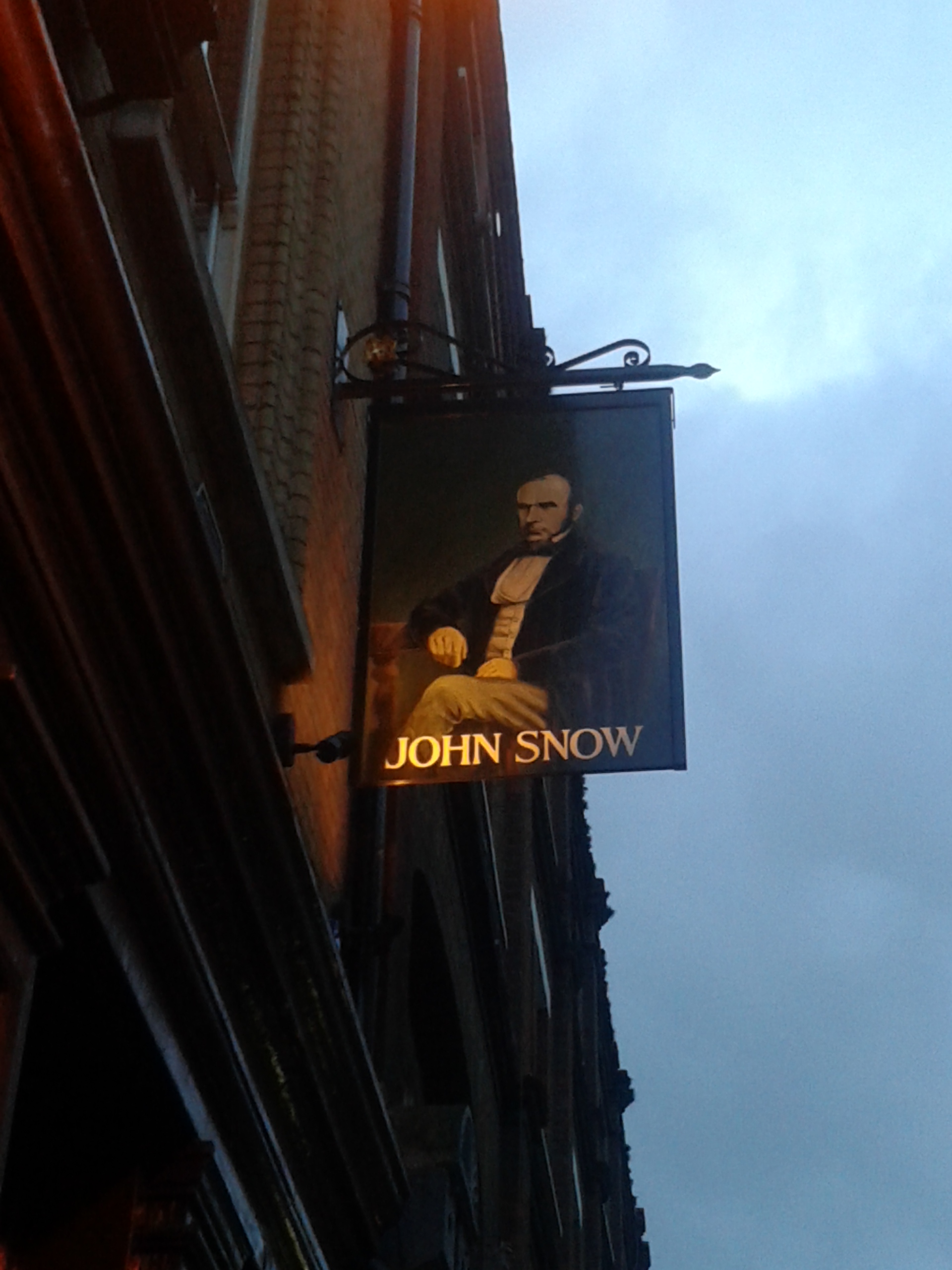
2014-02-04 16.55.40

I’m beyond ready for Game of Thrones to be back – as Kerry, once put it, you can tell a lot about a person by who you think should rule Westeros. Your answers to that immortal question in the comments, please. This guy also looks about as cheerful as Kit Harrington does in character – aka, miserable.

2014-02-09 11.27.00

The eventual title of my autobiography, I’ve decided.

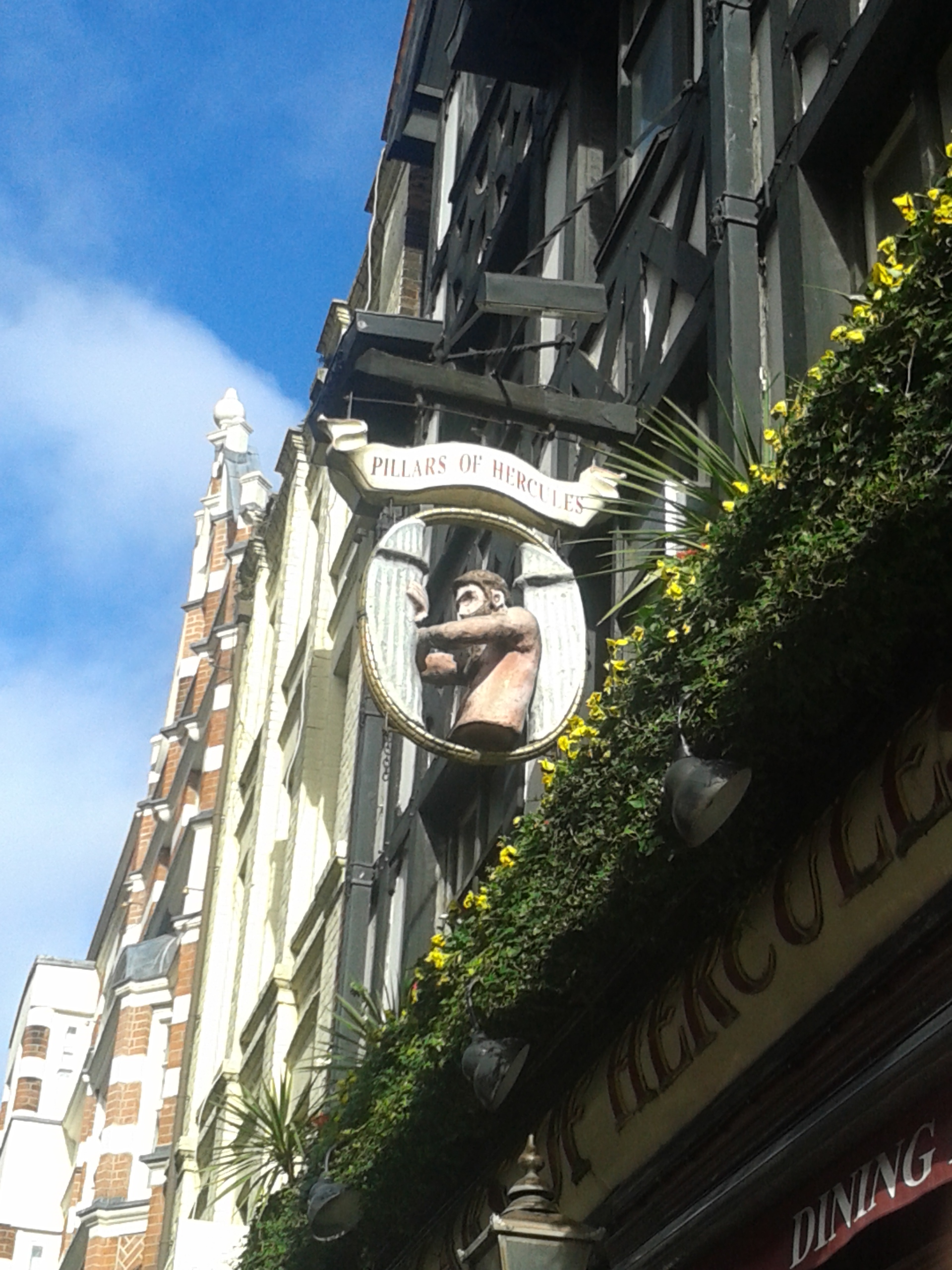
2014-02-09 11.23.35

One of my favorite pubs every for reasons that will become more clear in a later post.

2014-02-09 11.30.55

I haven’t investigated this claim as deeply as the Not-Sir-Christopher-Wren-Or-Queen-Catharine-of-Aragon House. But I will say I have seen more than one “oldest pub/restaurant/licensed premises in London” sign in my time.

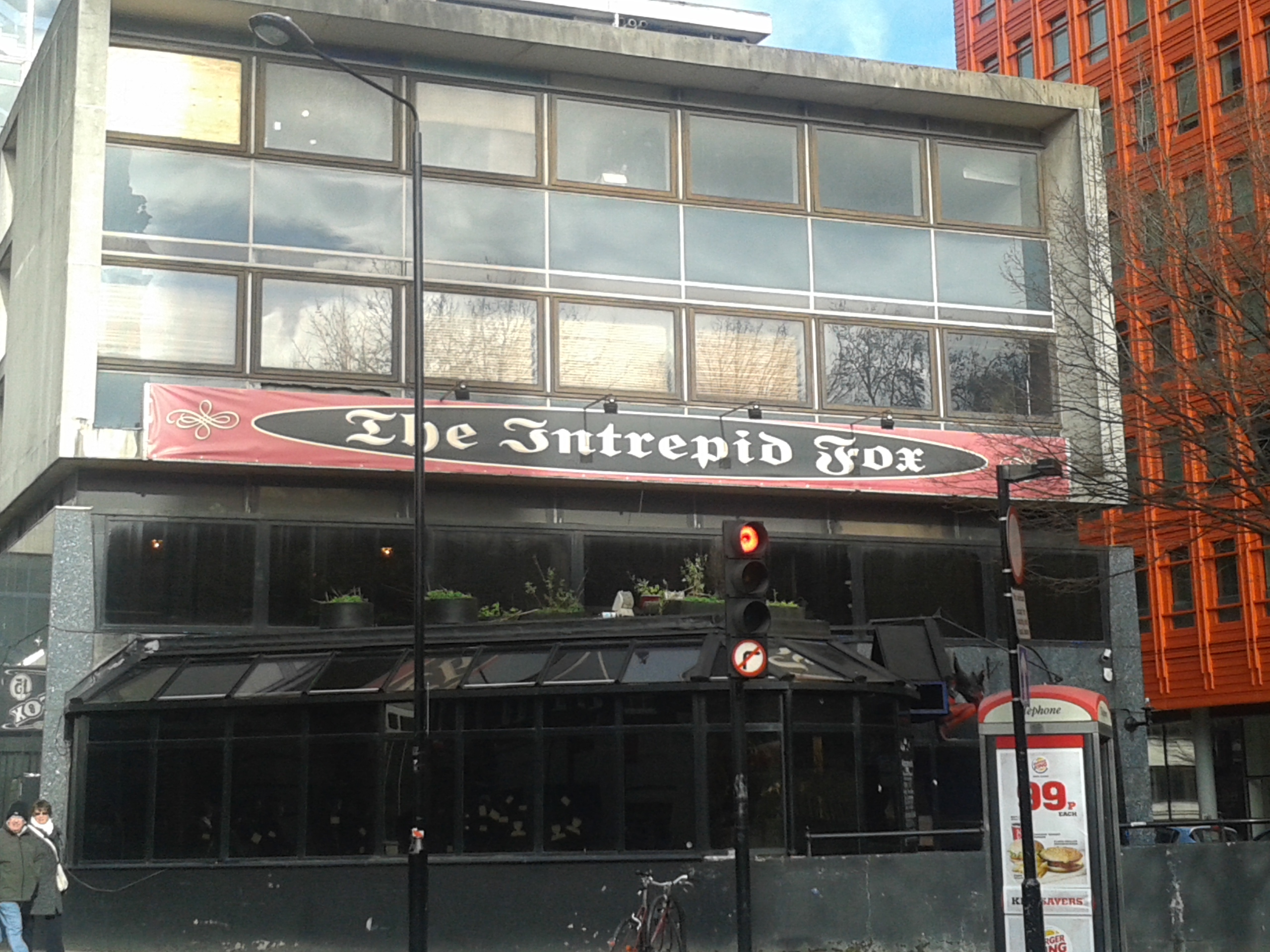
2014-02-09 11.22.50

Self explanatory. (Or if not, a landmark of a restaurant that had to close in October of last year, but petitions were got up to keep it opening and functioning because it’s a Soho mainstay. Also, the name is cheeky, because it’s Soho.)

Lies, Damn Lies, and History

“Do you just constantly have your own little side adventures?”
“Yep.”
– Troy and Abed, NBC’s Community

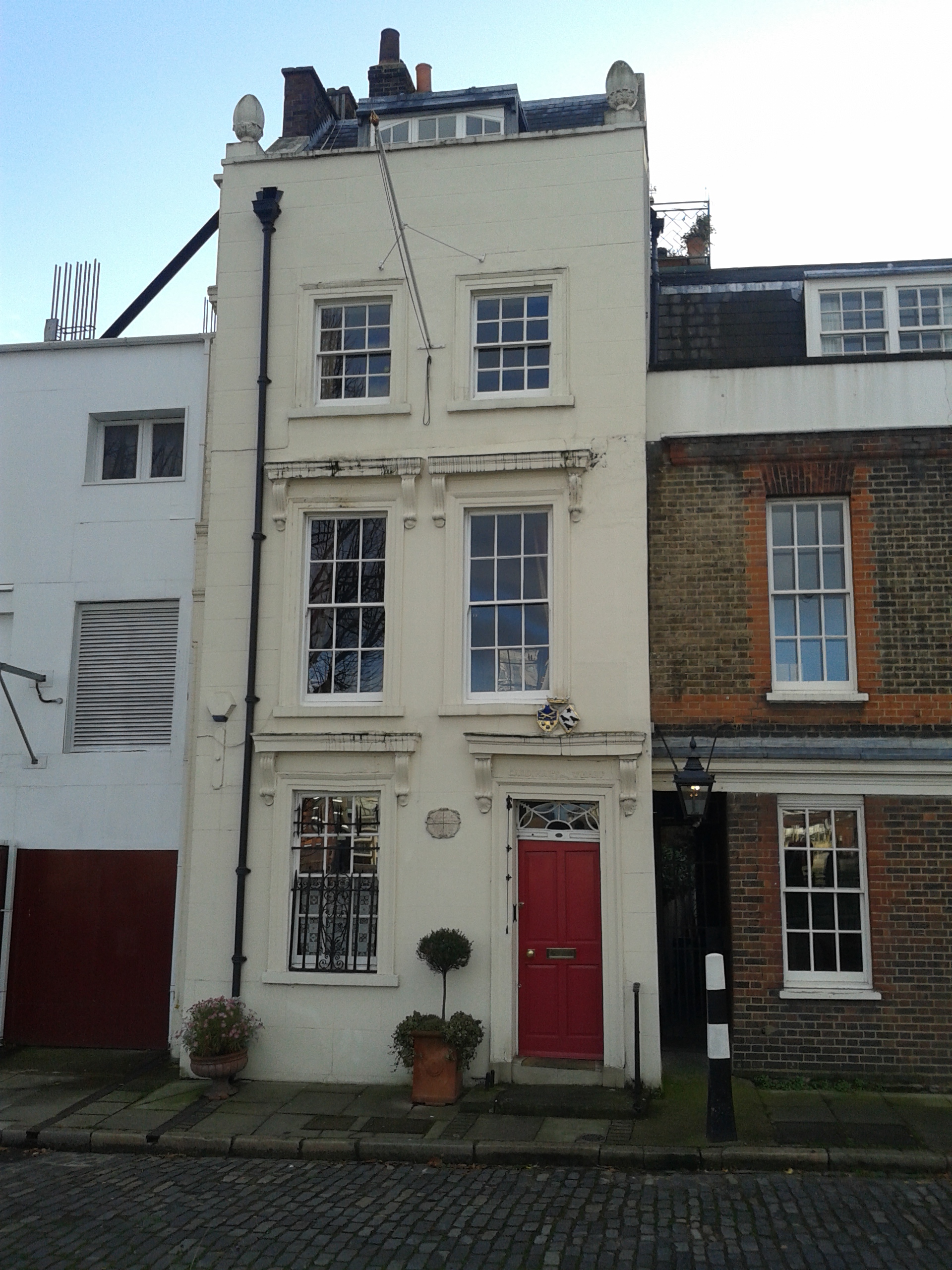
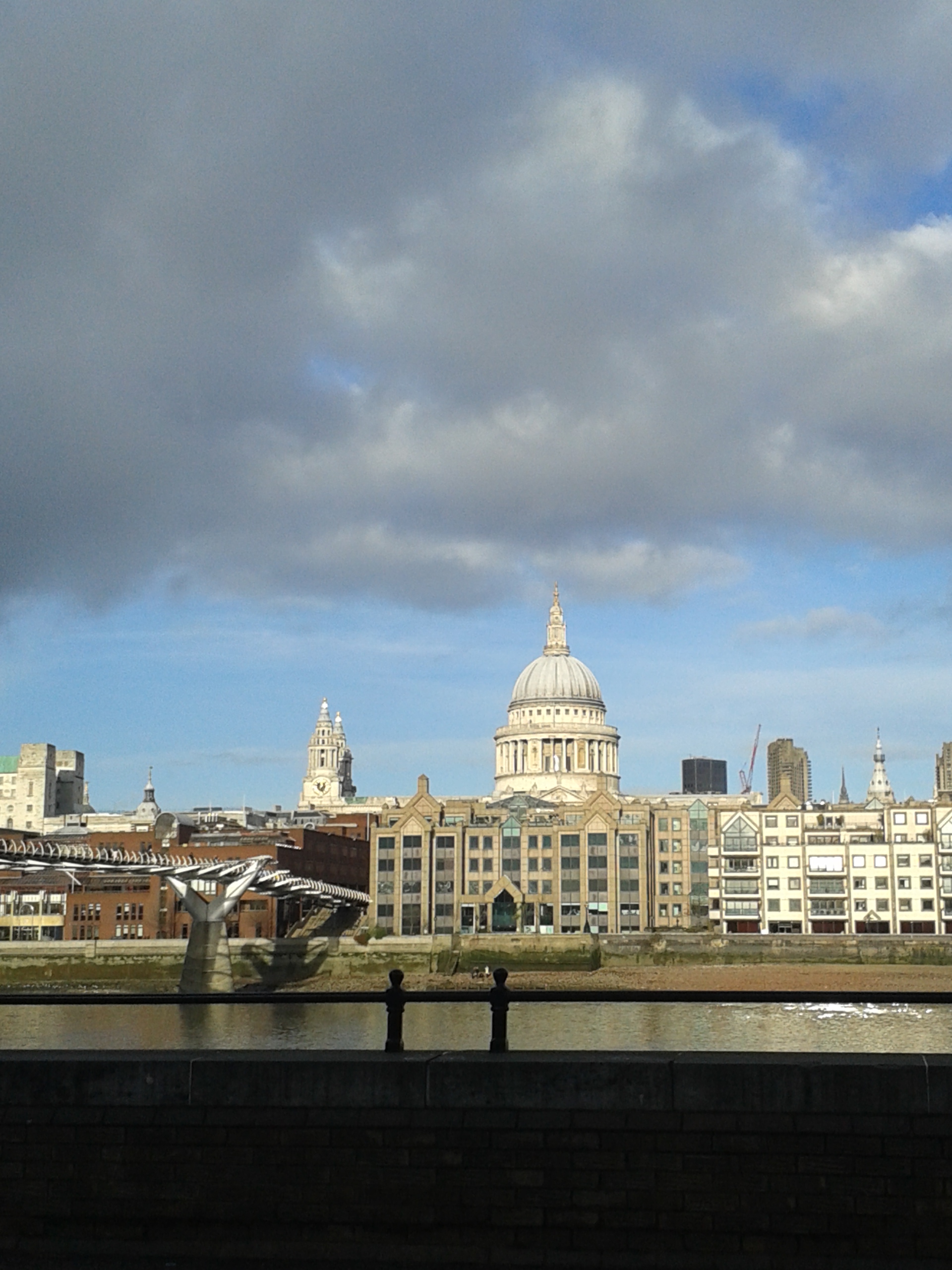
Jeff likes to tease me that I stumble across random historical and cultural things by mistake. He calls it, “leading him into wardrobes,” which I take to be a high compliment. But some of these adventures take the most pleasant of odd turns. Take for instance this charming little house nestled into a quiet spot near Shakespeare’s Globe Theatre on the south bank of the Thames.

Adorable, right?
Adorable, right?

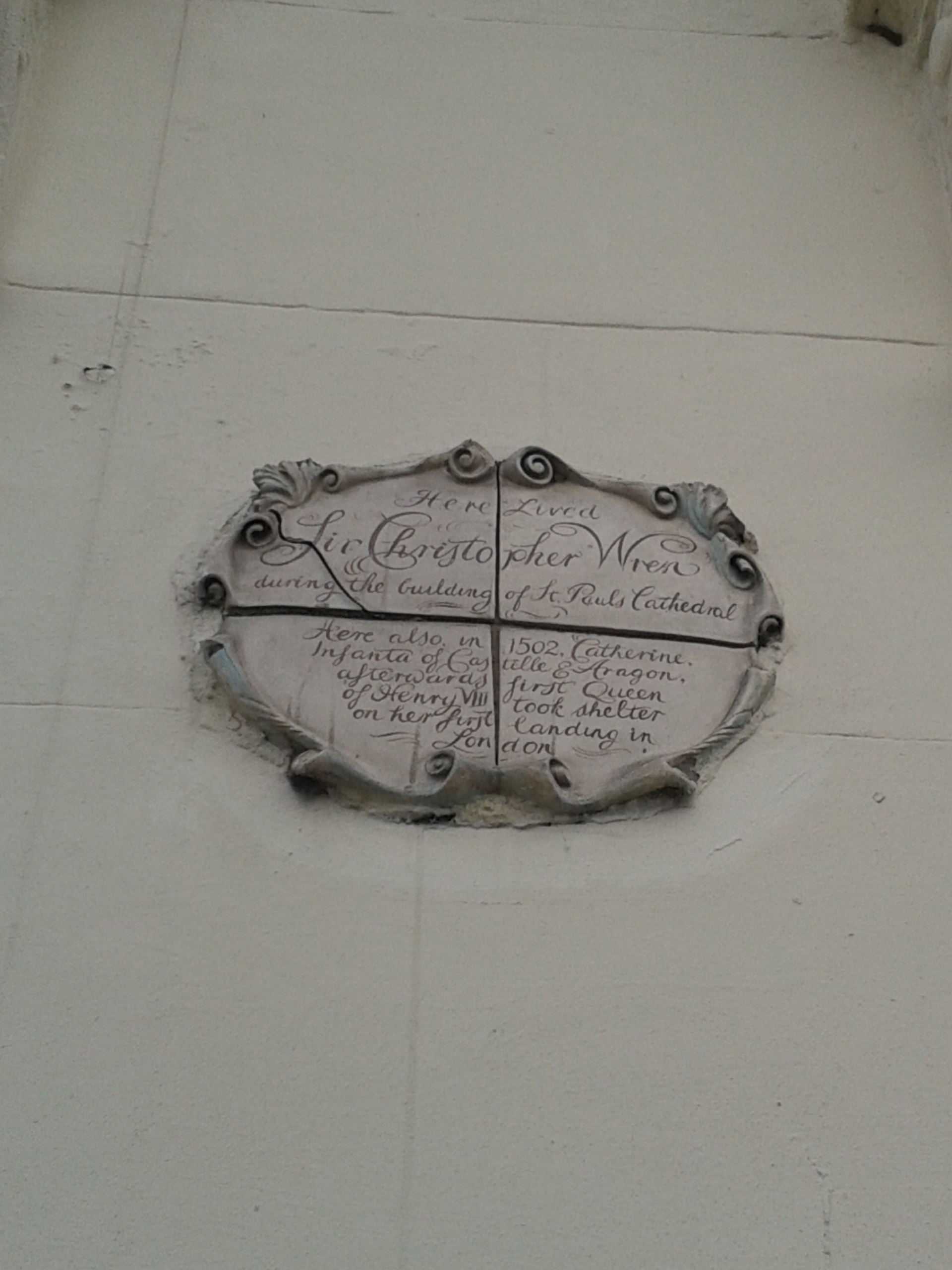
Exactly the sort of historical house I’d love to buy if I had pots of money. It had caught my eye before on many of our Thames strolls, but one evening I decided to wander closer (deaf to the dire warning of Jeff, who said I’d be arrested or at least scolded for venturing onto private property). Which is when I caught site of the stone inscription:

2013-12-25 12.05.15

Which, if squinting isn’t a help, reads, “Here lived Sir Christopher Wren during the building of St Paul’s cathedral. Here also, in 1502, Catherine Infanta of Castile and Aragon, afterwards first queen of Henry VIII, took shelter on her first landing in London.”

Which already would have been cool if it was true, but is even more cool since it’s a pack of lies!

A little historical digging, starting on the internets and confirmed in some more official records, leads you down the most glorious, London-y-est, twisty, and complex turns. First of all, the house on the site wasn’t built until 1710 which was the year St. Paul’s was completed – making it pretty hard for Wren to have lived there while he was building and totally impossible for the long suffering Catherine of Aragon to have stopped by at all.

2013-12-25 12.04.07
But in this alternate historical narrative, Wren’s view was fantastic.

To be fair, Wren did live up the road a few houses, but not at this particular bankside address. But in any event this placard (which as it turns out is a recreation of an earlier one that has disappeared) seems to have originated on a nearby building – which historians are unable to determine was or was not the site of Wren’s house. When the building was demolished, an intrepid local salvaged Placard 2.0 and hoisted it onto his own house.

In the final twist, this area of London was bombed heavily during WWII and was considered to be a less desirable part of town in general (I’ve mentioned before that we live in a former Dickensian slum, yes?) So after the war the powers that be were thinking of ways to improve the neighborhood. Postwar, and currently this usually meant bulldozing the damaged history bits and putting up new developments…

But!

The placard ensconced in the stone made them wary that they might be tearing down a culturally relevant site. And though sometimes weighed down by bureaucracy, the Brits usually bow to their own history.

Thus this Stuart era house – where Christopher Wren did NOT live, and Catherine of Aragon did not break her journey – stands. Impervious to historical accuracy, Hitler, and planning councils!

Chocolate Week Part I: The Chocolate Museum

“All you need is love. But a little chocolate now and then doesn’t hurt.”
― Charles M. Schulz

Chocolate has played a significant role in our social lives lately, so brace yourselves for a week of it here on Small Dog Cocoa Beans Lovers and Consumers, Inc. First stop on our tour of goodness, the Chocolate Museum in Brixton.

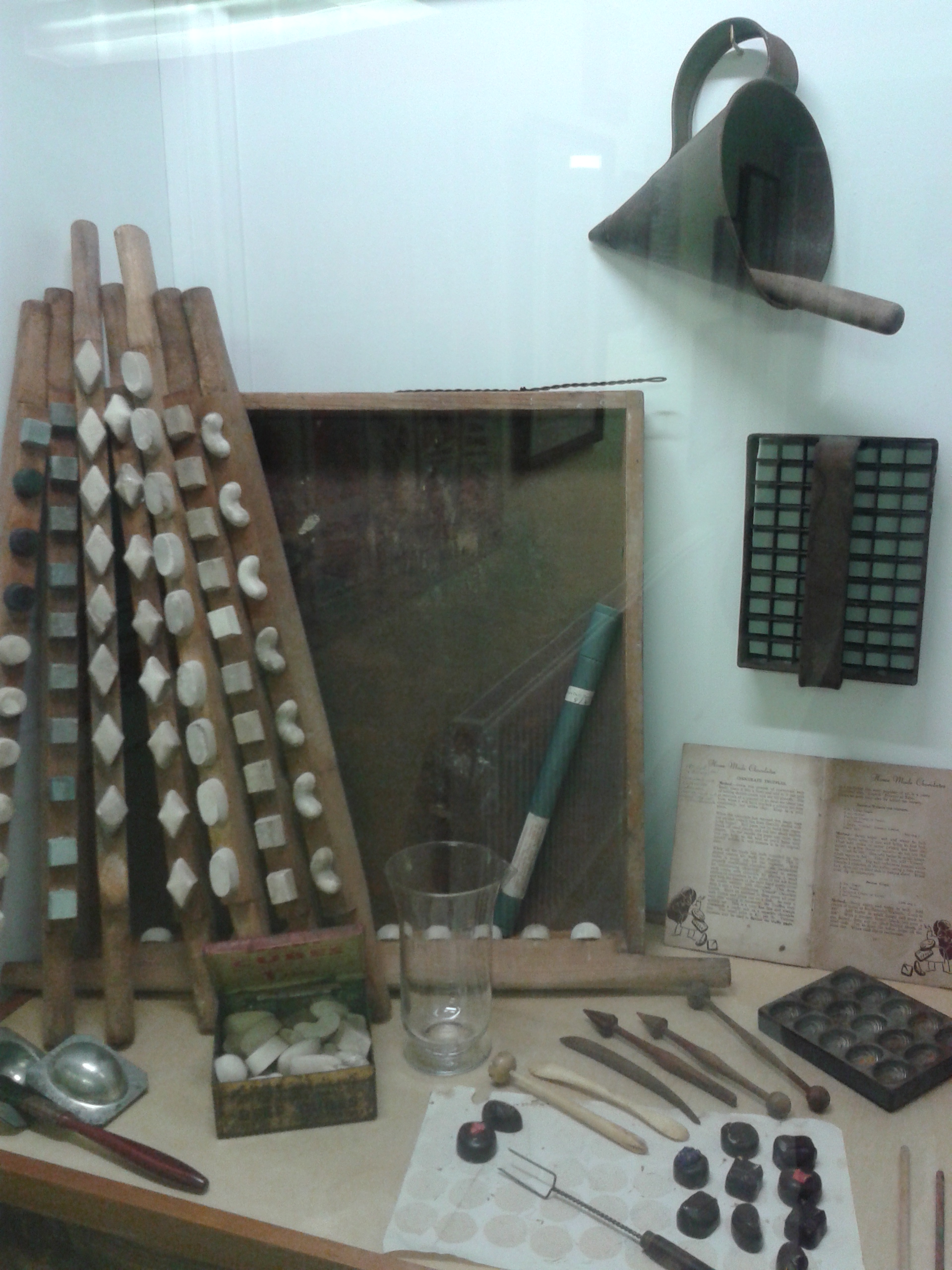
Frankly on its face it a bit…dinky. It’s not the museum’s fault. It’s a tiny, tiny two room independent establishment with about three display cases and a few wall displays of historic artifacts relating to the history of chocolate in Britain.

A couple centuries of British chocolate pots.
Tools of the chocolatier trade.

Which is a fascinating subject! Chocolate and coffee houses were places of major political and social unrest and discourse, particularly in the 17th and 18th centuries. It’s rise as a sweet beverage (instead of its original state as a bitter, odd tasting thing drunk by the people of the New World) coincided directly with the rise of sugar…and therefore the slave trade – which Britain played a major role in both spreading and ending. Cadbury’s supported troops in the First World War with supplies (including chocolate of course), and in World War II converted part of their factory to to making airplane parts. Also during WWII chocolate was deemed an “essential food item” (truth!) and its manufacture and distrubution was carefully monitored, which it became a major black market item until rationing for it ended.  While not on the level of Belgian, German, and Swiss chocolatiers, British candymakers are responsible for a lot of the popular appeal and commercial availability of chocolate. John Cadbury is the man responsible for inventing the method responsible for the creation of solid chocolate bars – for which humanity should be duly grateful.

In other words, yeah! Topic deserving of a museum! A museum with more than a couple of rooms.

Chocolate consumption around the globe, which is pretty interesting!

But despite the seemingly limited setting, the Chocolate Museum has quite a few things going for it. First of all it puts on a number of chocolate making workshops and themed events throughout the year. Secondly it stocks some genuinely stellar chocolate items from artisan and free-trade growers and makers.

It was at one such event that Jeff and I made the museum’s acquaintance. Their Christmas Fair to be precise. Along with their wares, on display for nibbling, other artisans were invited to pair their offerings with the chocolates. Wine, beer, coffee, tea, cheese, breads, cured meats, and honey were prominent, but Jeff and I got distracted by a woman selling funky Italian, naturally made sodas.
Hi Jeff!
Hi Jeff!

We came away with lots of chocolate bars (ginger and lime for him, cardamon and nutmeg for me), and a hunk of farmhouse cheddar that was scrumptious. I’ll definitely be heading back to the Chocolate Museum, even though I’ve seen it in its entirety, for two reasons. First of all because I’ve not found cardamon flavored chocolate anywhere else that didn’t cost me an arm and a leg. Secondly because I believe strongly in supporting small museums dedicated to telling narrowly focused historical narratives.

The Middling Sort

“The ornament of a house is the friends who frequent it.”
― Ralph Waldo Emerson

Awkward realization. Without exactly intending it it, this week’s content is moderately themed. Which wouldn’t be so bad if not for the fact that next week’s tales of adventure and mayhem are explicitly themed (and that theme, kittens, is chocolate so you know you’re going to love it). Regardless, the unintentional theme this week is decor!

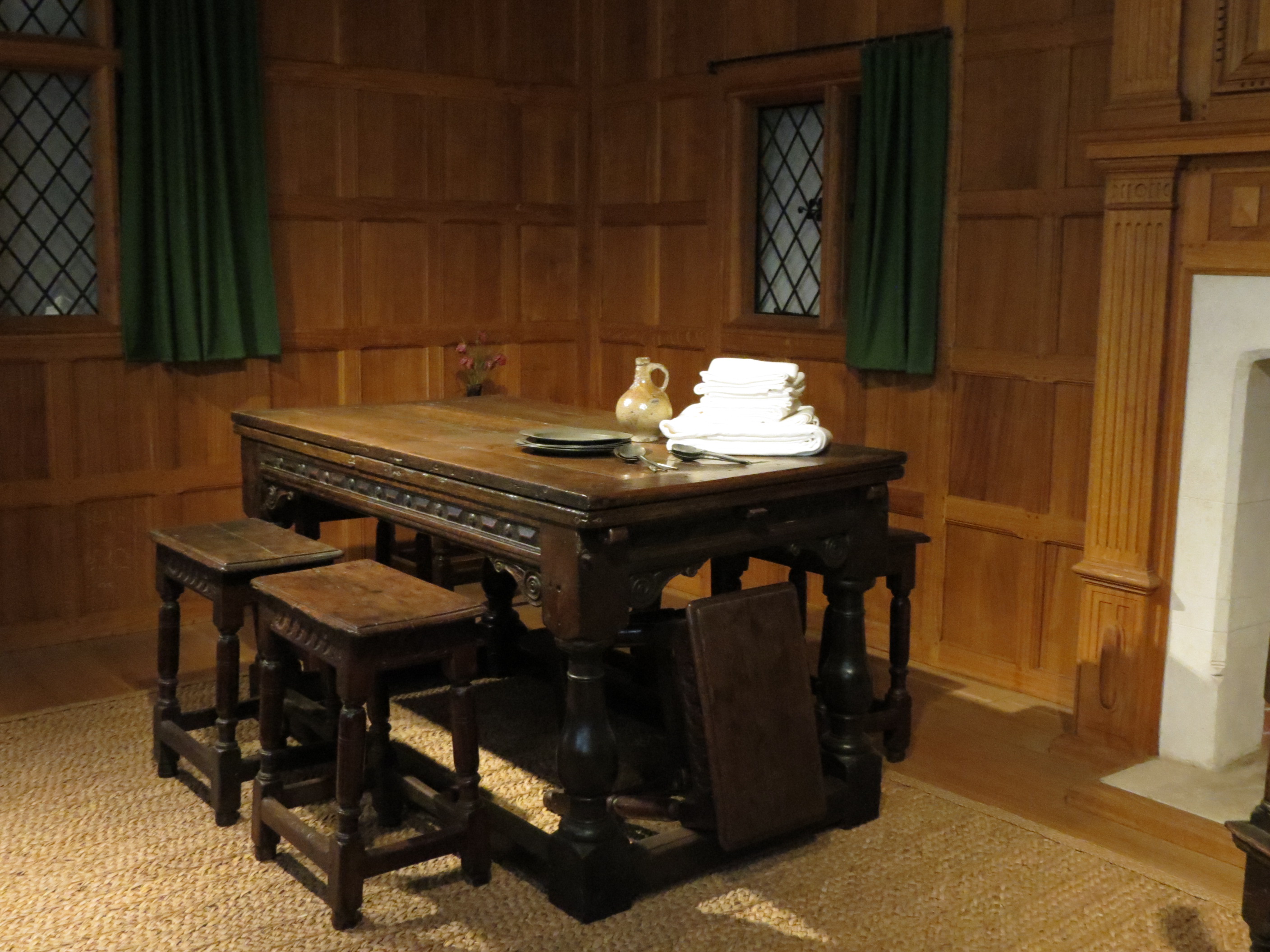
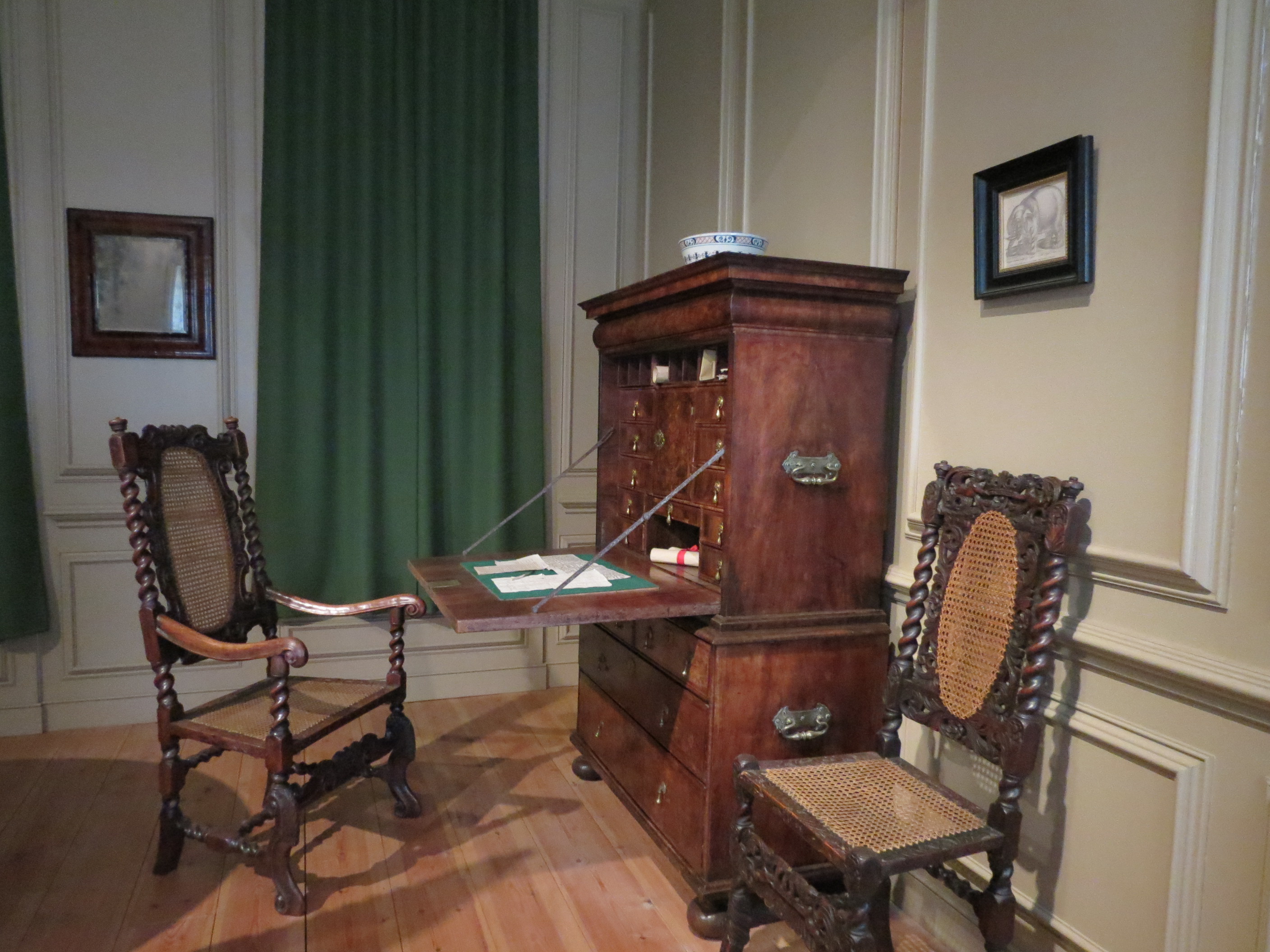
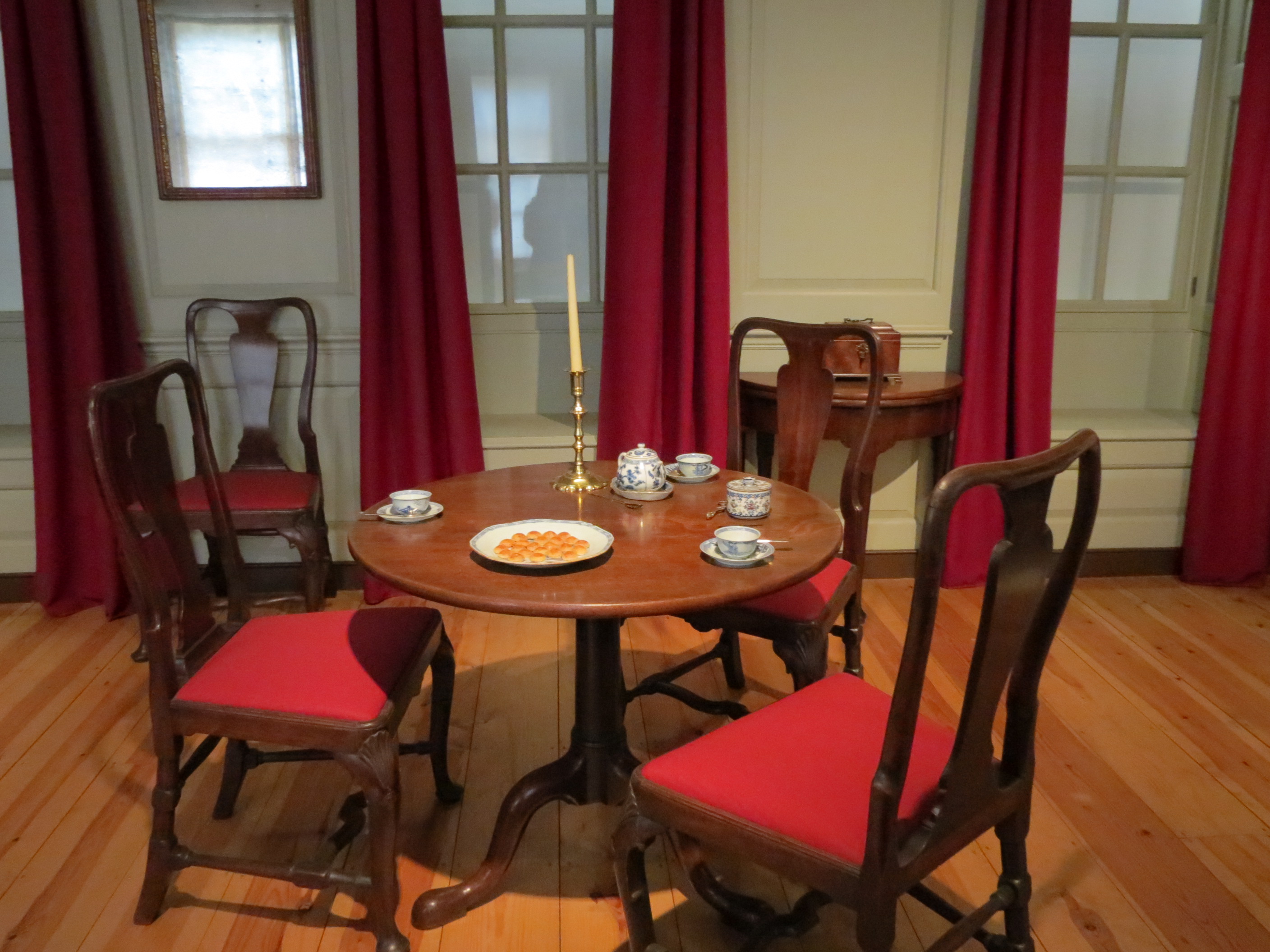
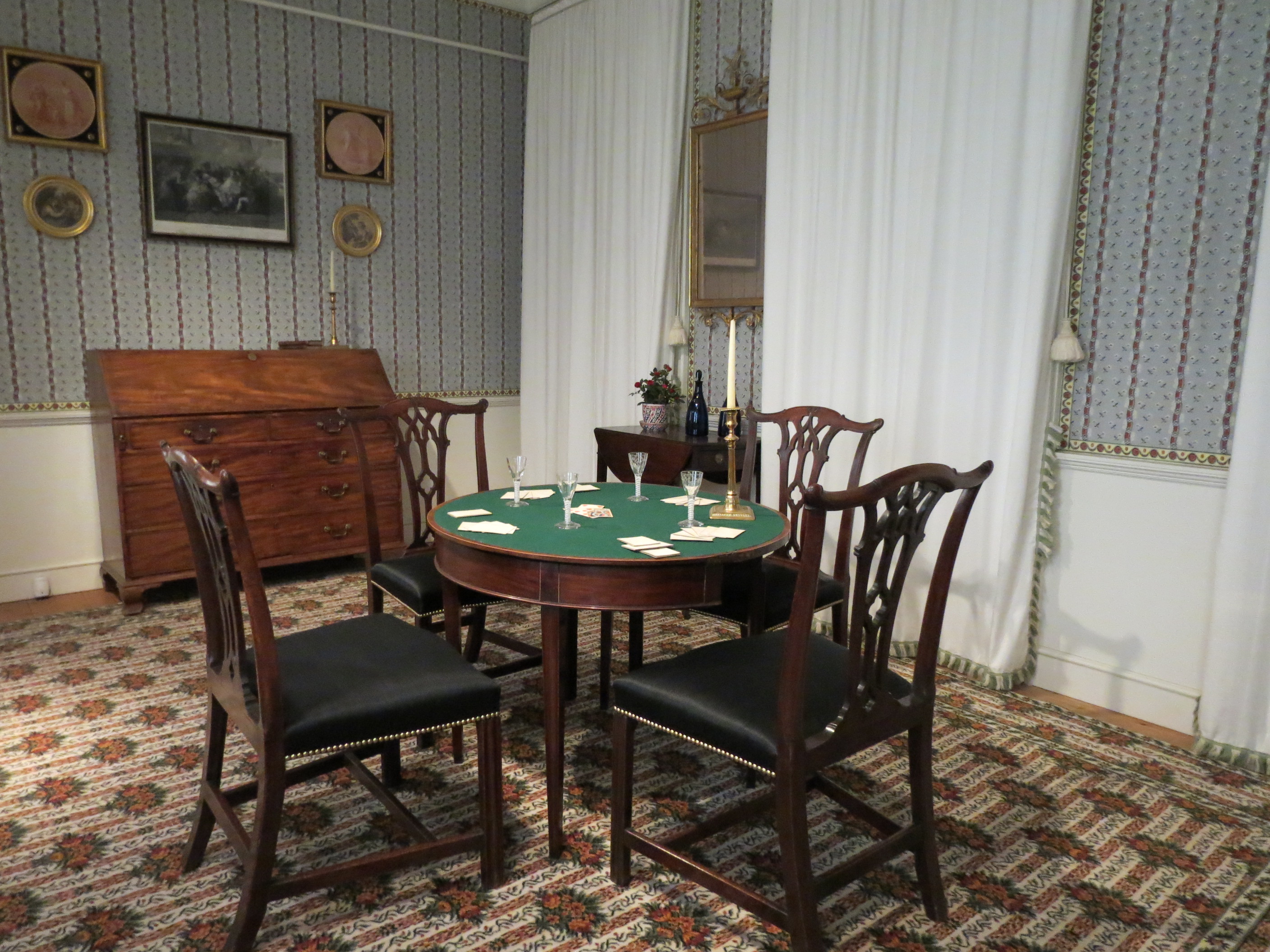
On Saturday Katie and I met up to go to the Geffrye Museum of the Home, showcasing how the design, decoration, form, and function of British homes have evolved over the last 400 years.

There charmingly are even a couple resident cats who deigned to make my acquaintance in the midst of hunting pigeons.

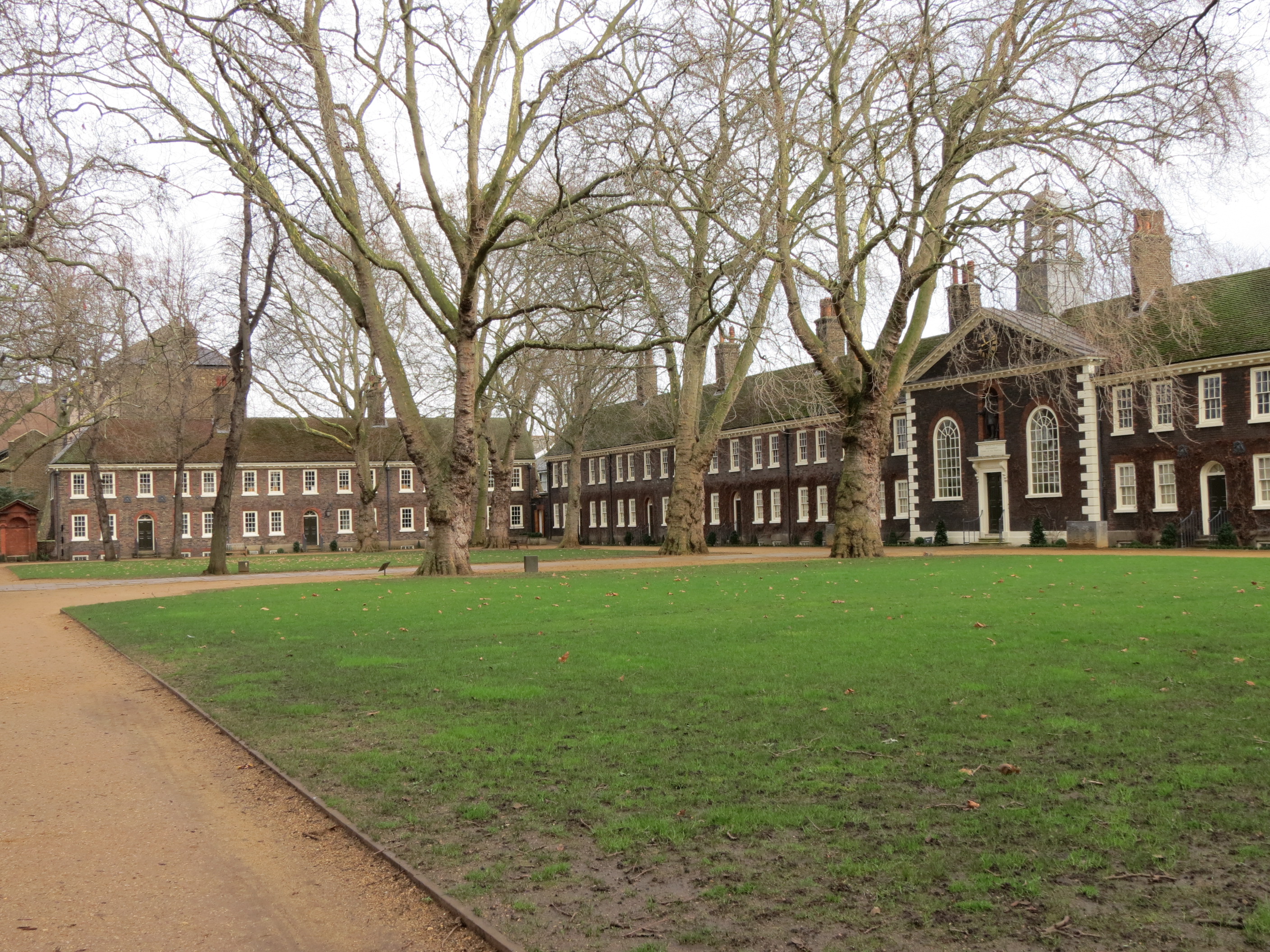
The building itself is made of almshouses from the 18th century, originally built by Sir Robert Geffrye, but acquired by the London County Council early in the 20th. Instead of demolishing the site, it was turned into a museum and today holds authentic furnishings and home goods stretching from the 1600s right up though today. It’s focus is on the everyday life of the British middle class, which makes a nice change from most institutions which tend to focus on the Great and Important. Walk with me.

IMG_0857
The 18th century buildings really are beautifully preserved and maintained.
A 17th century dining and main family area.
Early 18th century writing desk.
17th century tea table - note the early teacups sans handles!
18th century tea table – note the early teacups sans handles and the prominently displayed tea caddy!
Georgian card table in a parlor.
An early Victorian sitting room. I didn't include any late Victorian stuff because frankly I find the design period hideous. I never claimed impartiality.
An early Victorian sitting room. I didn’t include any late Victorian stuff because frankly I find the design period hideous. I never claimed impartiality.
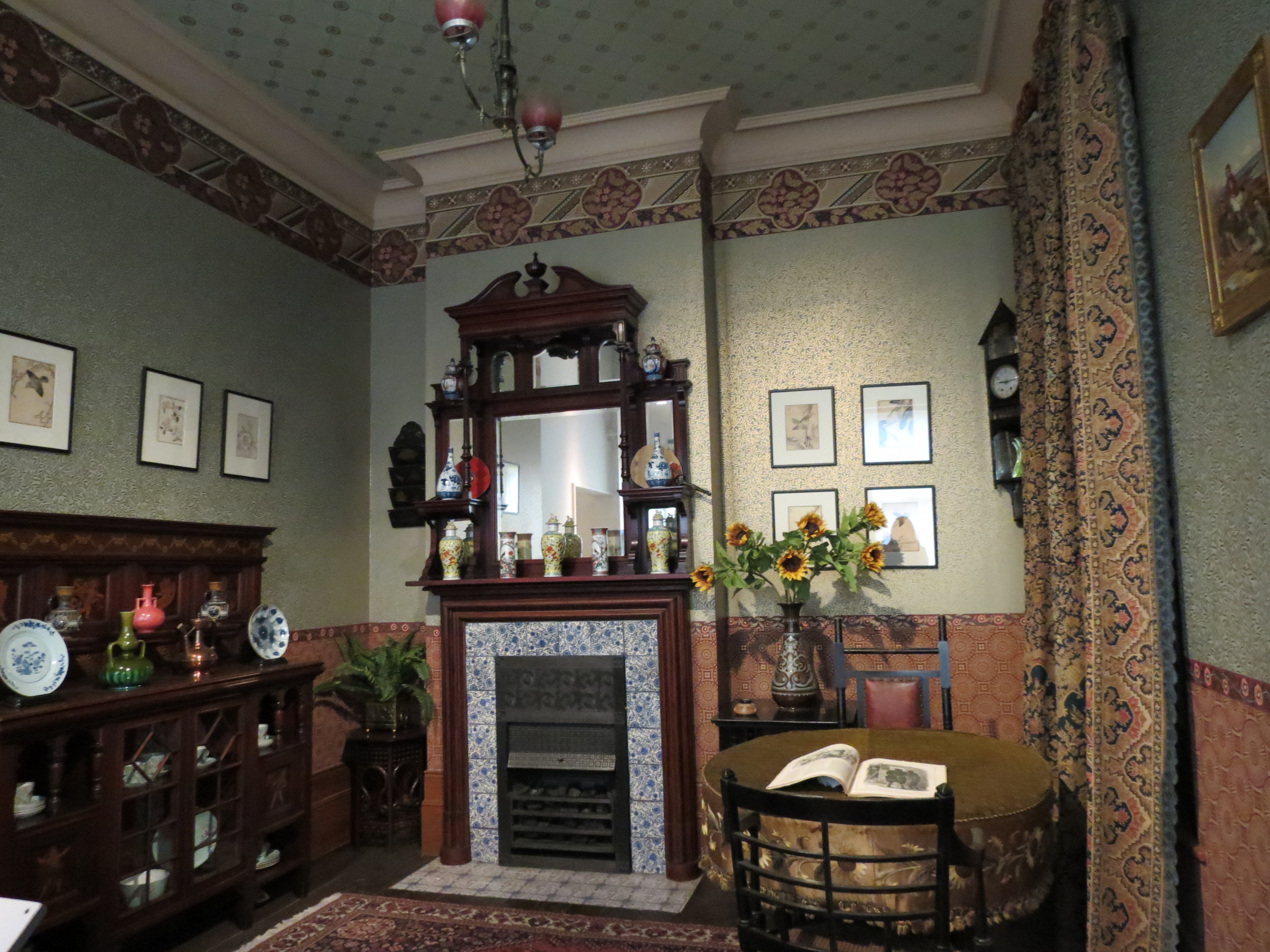
Things calmed down significantly in the Aesthetic movement, so photos are allowed to resume.
There was a whole room devoted to Mid-century design which was delightful, but I fell in love with the period television set.

It’s a wonderful museum and well worth a look in if you’re design minded. In their galleries there is currently another exhibit that I loved documenting the private history of homes around the UK. Current owners look into their the past of their dwellings and found some amazing things, including children’s toys under floorboard discovered during renovations, and tales of hauntings.
The museum is totally free (donations encouraged) and open Tuesday through Sunday.