Tag: History

Chocolate Week Part I: The Chocolate Museum

“All you need is love. But a little chocolate now and then doesn’t hurt.”
― Charles M. Schulz

Chocolate has played a significant role in our social lives lately, so brace yourselves for a week of it here on Small Dog Cocoa Beans Lovers and Consumers, Inc. First stop on our tour of goodness, the Chocolate Museum in Brixton.

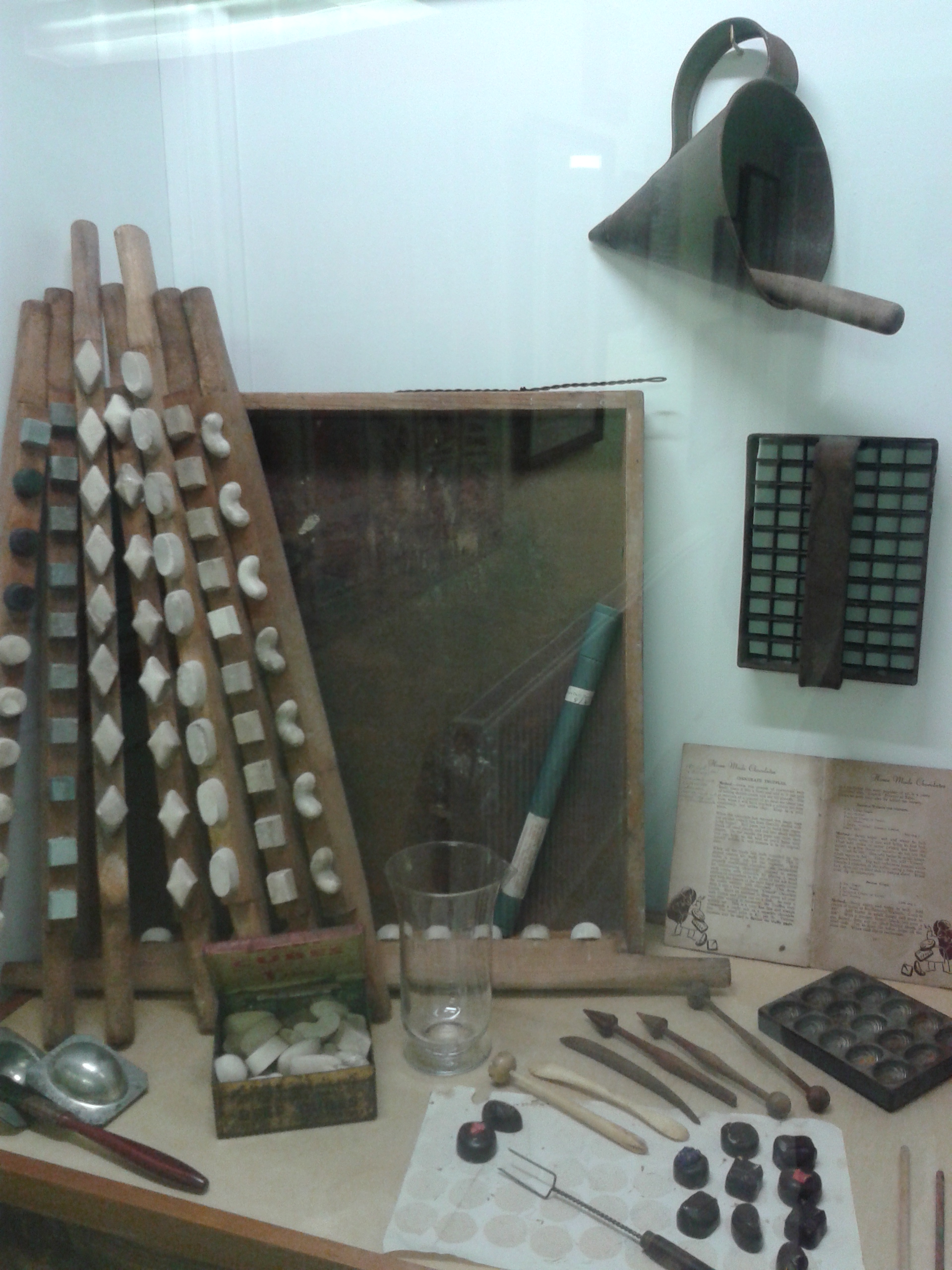
Frankly on its face it a bit…dinky. It’s not the museum’s fault. It’s a tiny, tiny two room independent establishment with about three display cases and a few wall displays of historic artifacts relating to the history of chocolate in Britain.

A couple centuries of British chocolate pots.
Tools of the chocolatier trade.

Which is a fascinating subject! Chocolate and coffee houses were places of major political and social unrest and discourse, particularly in the 17th and 18th centuries. It’s rise as a sweet beverage (instead of its original state as a bitter, odd tasting thing drunk by the people of the New World) coincided directly with the rise of sugar…and therefore the slave trade – which Britain played a major role in both spreading and ending. Cadbury’s supported troops in the First World War with supplies (including chocolate of course), and in World War II converted part of their factory to to making airplane parts. Also during WWII chocolate was deemed an “essential food item” (truth!) and its manufacture and distrubution was carefully monitored, which it became a major black market item until rationing for it ended.  While not on the level of Belgian, German, and Swiss chocolatiers, British candymakers are responsible for a lot of the popular appeal and commercial availability of chocolate. John Cadbury is the man responsible for inventing the method responsible for the creation of solid chocolate bars – for which humanity should be duly grateful.

In other words, yeah! Topic deserving of a museum! A museum with more than a couple of rooms.

Chocolate consumption around the globe, which is pretty interesting!

But despite the seemingly limited setting, the Chocolate Museum has quite a few things going for it. First of all it puts on a number of chocolate making workshops and themed events throughout the year. Secondly it stocks some genuinely stellar chocolate items from artisan and free-trade growers and makers.

It was at one such event that Jeff and I made the museum’s acquaintance. Their Christmas Fair to be precise. Along with their wares, on display for nibbling, other artisans were invited to pair their offerings with the chocolates. Wine, beer, coffee, tea, cheese, breads, cured meats, and honey were prominent, but Jeff and I got distracted by a woman selling funky Italian, naturally made sodas.

Hi Jeff!
Hi Jeff!

We came away with lots of chocolate bars (ginger and lime for him, cardamon and nutmeg for me), and a hunk of farmhouse cheddar that was scrumptious. I’ll definitely be heading back to the Chocolate Museum, even though I’ve seen it in its entirety, for two reasons. First of all because I’ve not found cardamon flavored chocolate anywhere else that didn’t cost me an arm and a leg. Secondly because I believe strongly in supporting small museums dedicated to telling narrowly focused historical narratives.

The Middling Sort

“The ornament of a house is the friends who frequent it.”
― Ralph Waldo Emerson

Awkward realization. Without exactly intending it it, this week’s content is moderately themed. Which wouldn’t be so bad if not for the fact that next week’s tales of adventure and mayhem are explicitly themed (and that theme, kittens, is chocolate so you know you’re going to love it). Regardless, the unintentional theme this week is decor!

On Saturday Katie and I met up to go to the Geffrye Museum of the Home, showcasing how the design, decoration, form, and function of British homes have evolved over the last 400 years.

There charmingly are even a couple resident cats who deigned to make my acquaintance in the midst of hunting pigeons.

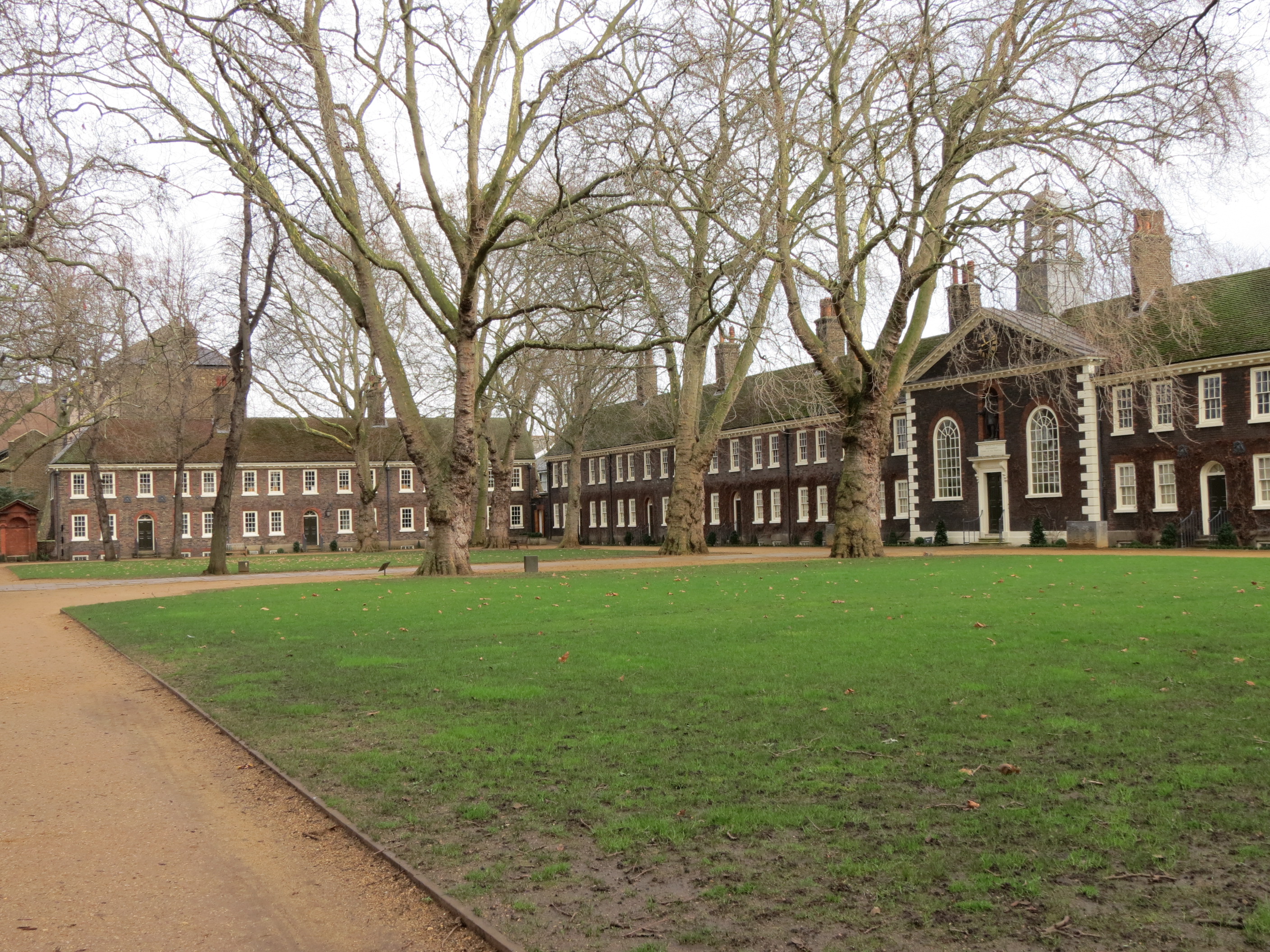
The building itself is made of almshouses from the 18th century, originally built by Sir Robert Geffrye, but acquired by the London County Council early in the 20th. Instead of demolishing the site, it was turned into a museum and today holds authentic furnishings and home goods stretching from the 1600s right up though today. It’s focus is on the everyday life of the British middle class, which makes a nice change from most institutions which tend to focus on the Great and Important. Walk with me.

IMG_0857
The 18th century buildings really are beautifully preserved and maintained.
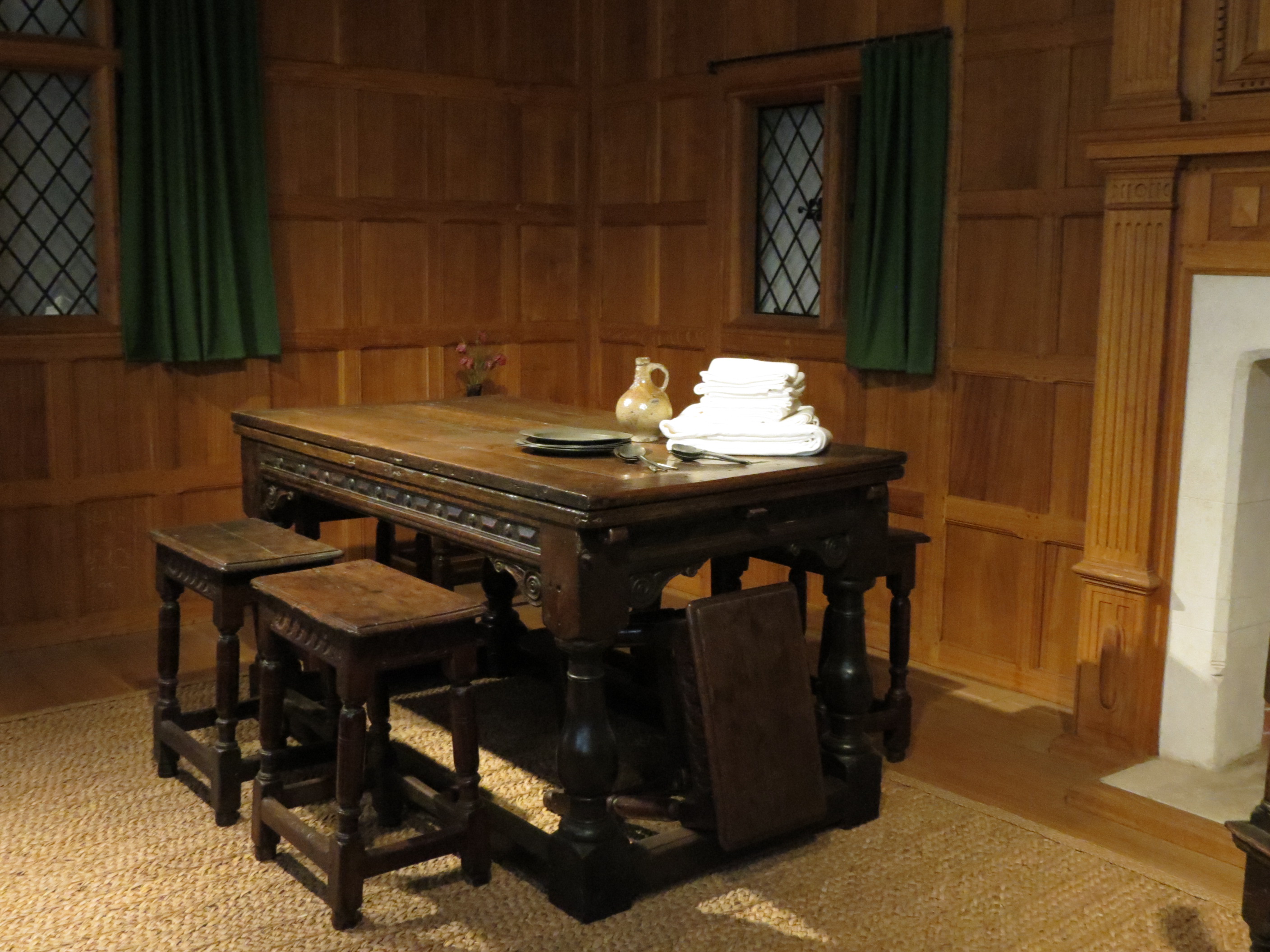
A 17th century dining and main family area.
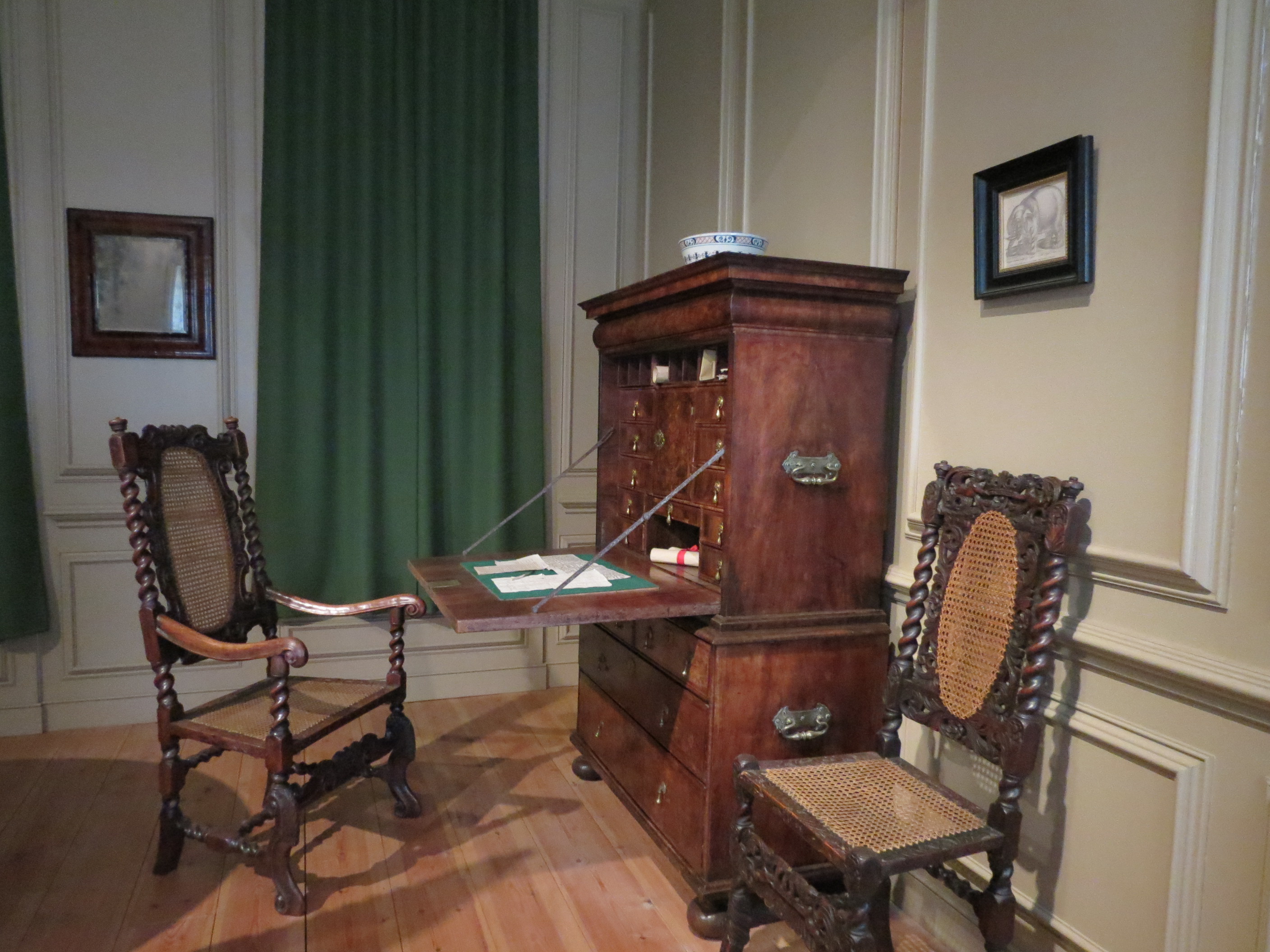
Early 18th century writing desk.
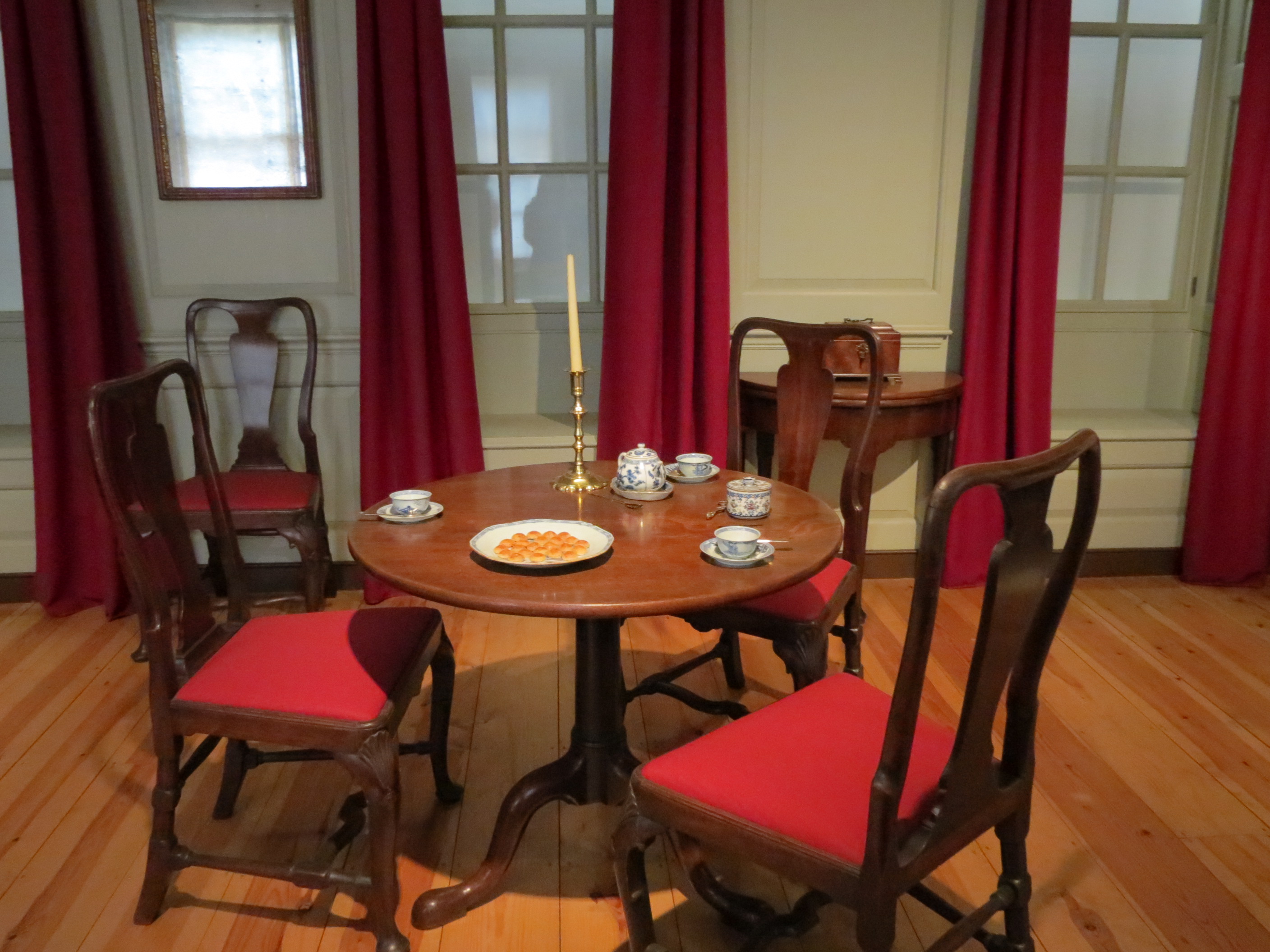
17th century tea table - note the early teacups sans handles!
18th century tea table – note the early teacups sans handles and the prominently displayed tea caddy!
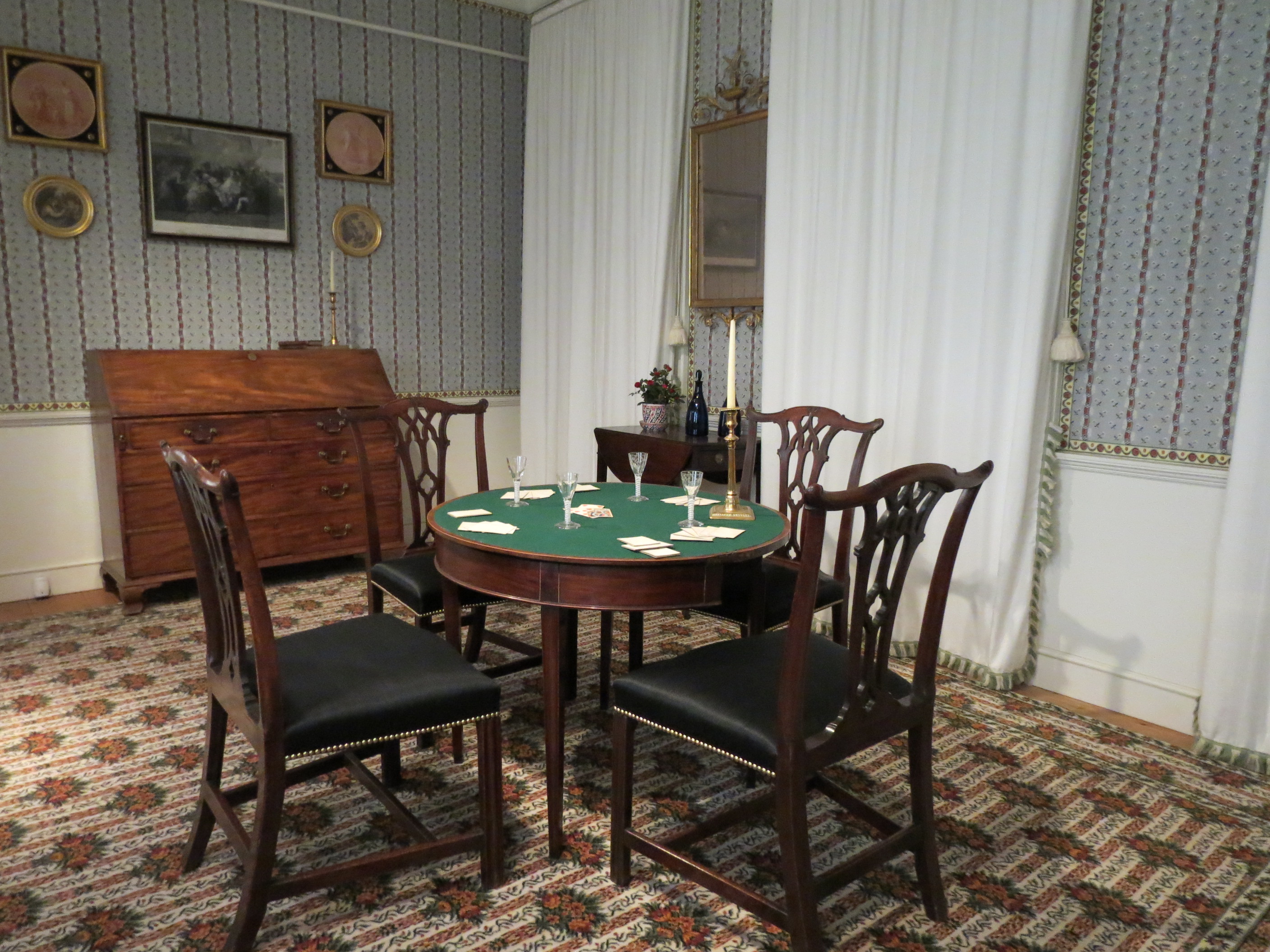
Georgian card table in a parlor.
An early Victorian sitting room. I didn't include any late Victorian stuff because frankly I find the design period hideous. I never claimed impartiality.
An early Victorian sitting room. I didn’t include any late Victorian stuff because frankly I find the design period hideous. I never claimed impartiality.
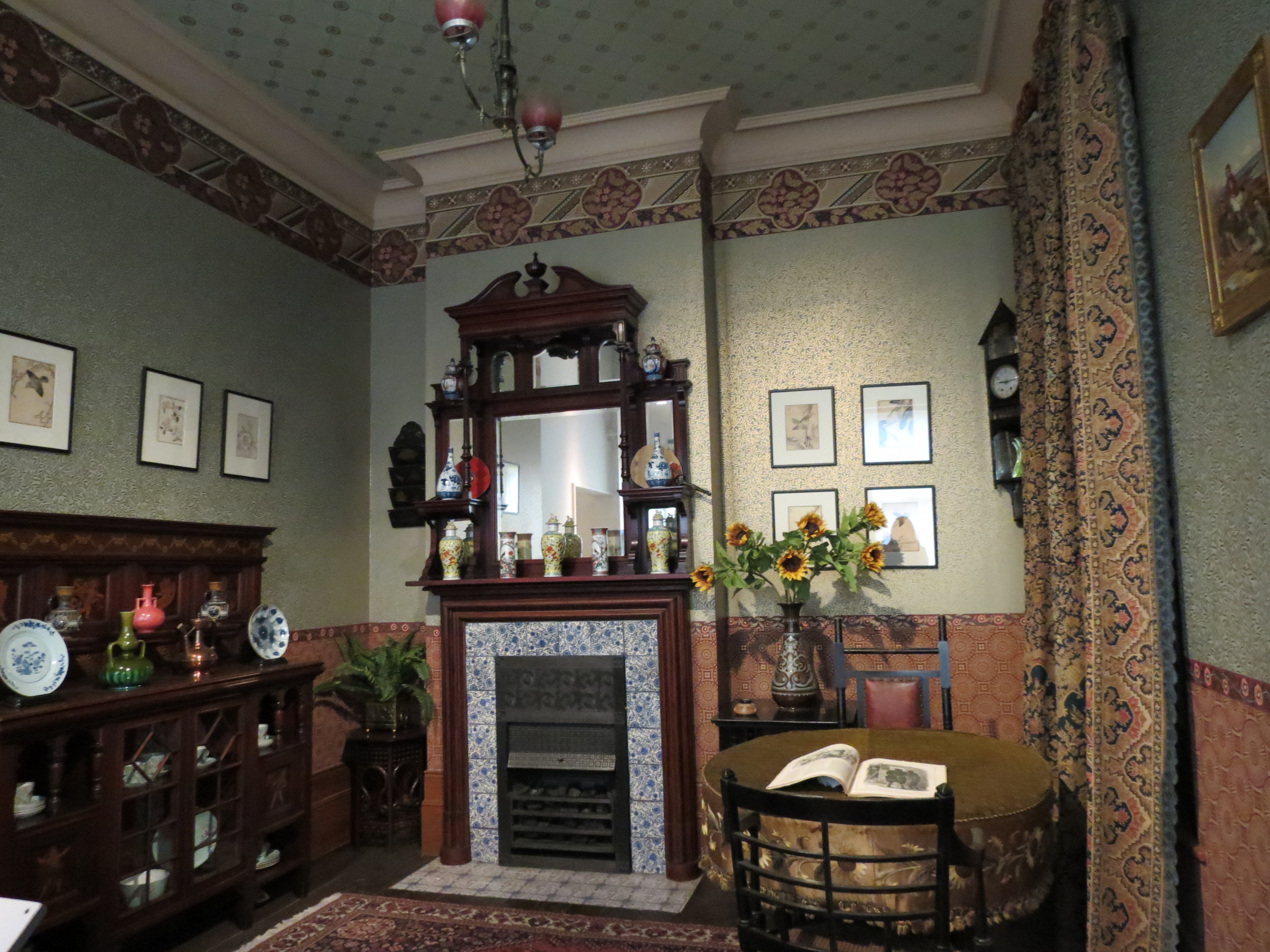
Things calmed down significantly in the Aesthetic movement, so photos are allowed to resume.
There was a whole room devoted to Mid-century design which was delightful, but I fell in love with the period television set.

It’s a wonderful museum and well worth a look in if you’re design minded. In their galleries there is currently another exhibit that I loved documenting the private history of homes around the UK. Current owners look into their the past of their dwellings and found some amazing things, including children’s toys under floorboard discovered during renovations, and tales of hauntings.
The museum is totally free (donations encouraged) and open Tuesday through Sunday.

Night at the Museum

“I wonder if we are seeing a return to the object in the science-based museum. Since any visitor can go to a film like Jurassic Park and see dinosaurs reawakened more graphically than any museum could emulate, maybe a museum should be the place to have an encounter with the bony truth. Maybe some children have overdosed on simulations on their computers at home and just want to see something solid–a fact of life.”
― Richard Fortey, Dry Store Room No. 1: The Secret Life Of The Natural History Museum

The weeks are passing so quickly these days that it’s a little breathtaking, we glance up and it’s the last day of September already.

On Friday I went to the Bermondsey Antique Market, partly to find a wedding present for a freelancing client who has become a good friend, and partly because I was finally over that cold and needed to just get out of the house for a walk. Luckily I emerged victorious and with a croissant in hand. Breakfast of champions. The Bermondsey market is tiny compared to it’s more famous cousin Portobello Road, it all fits into one square, but the quality of goods is very comparable (and frankly some of the prices are loads better). The antique silver is excellent and some of the jewelry blew me away. There are also excellent niche stalls with pieces from the Far East, vintage clothing, and a fun group who collects and sell mid-century furniture. Friends should prepare themselves to receive Bermondsey Market’s offerings for a myriad of birthdays and holidays.

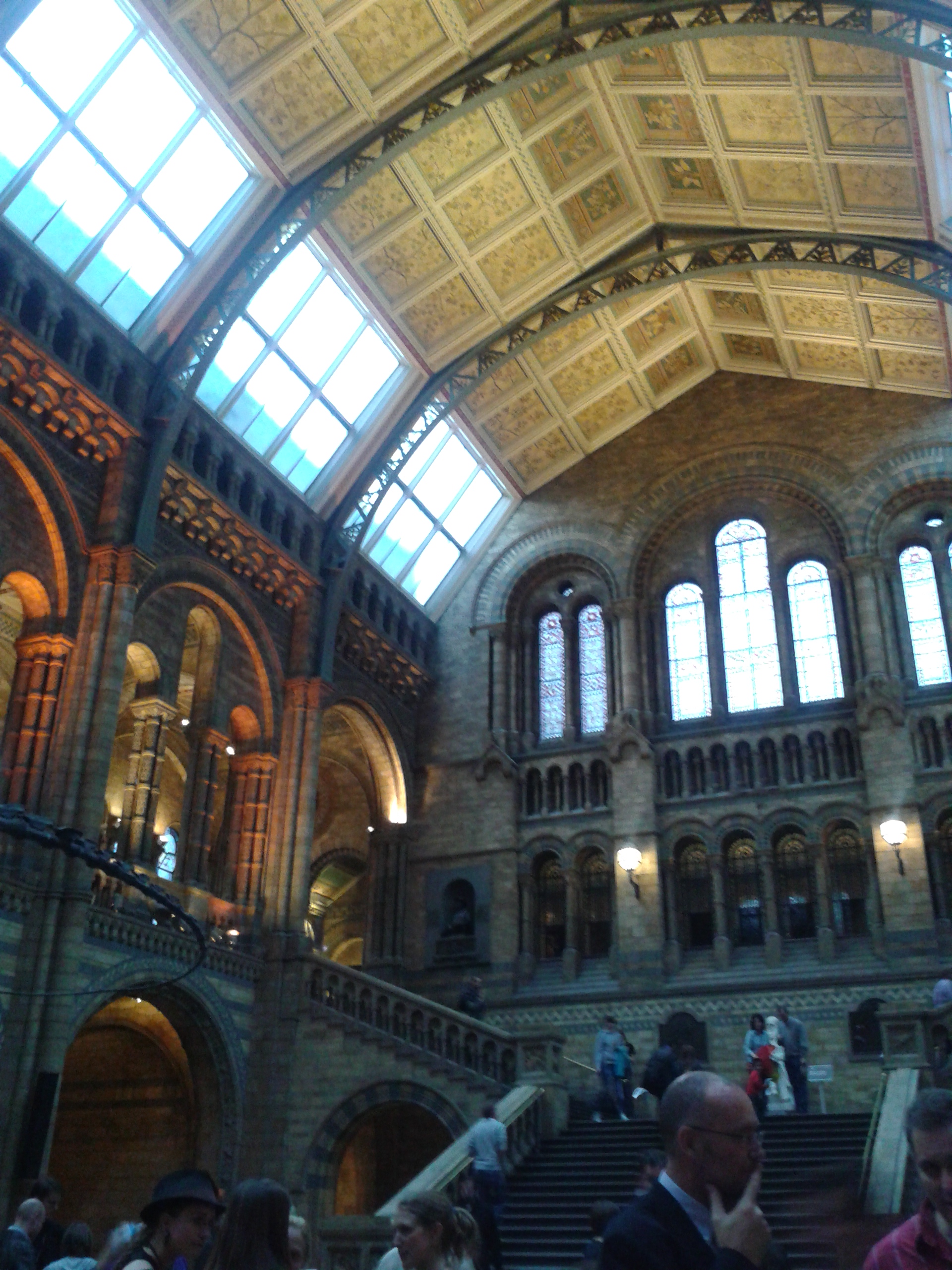
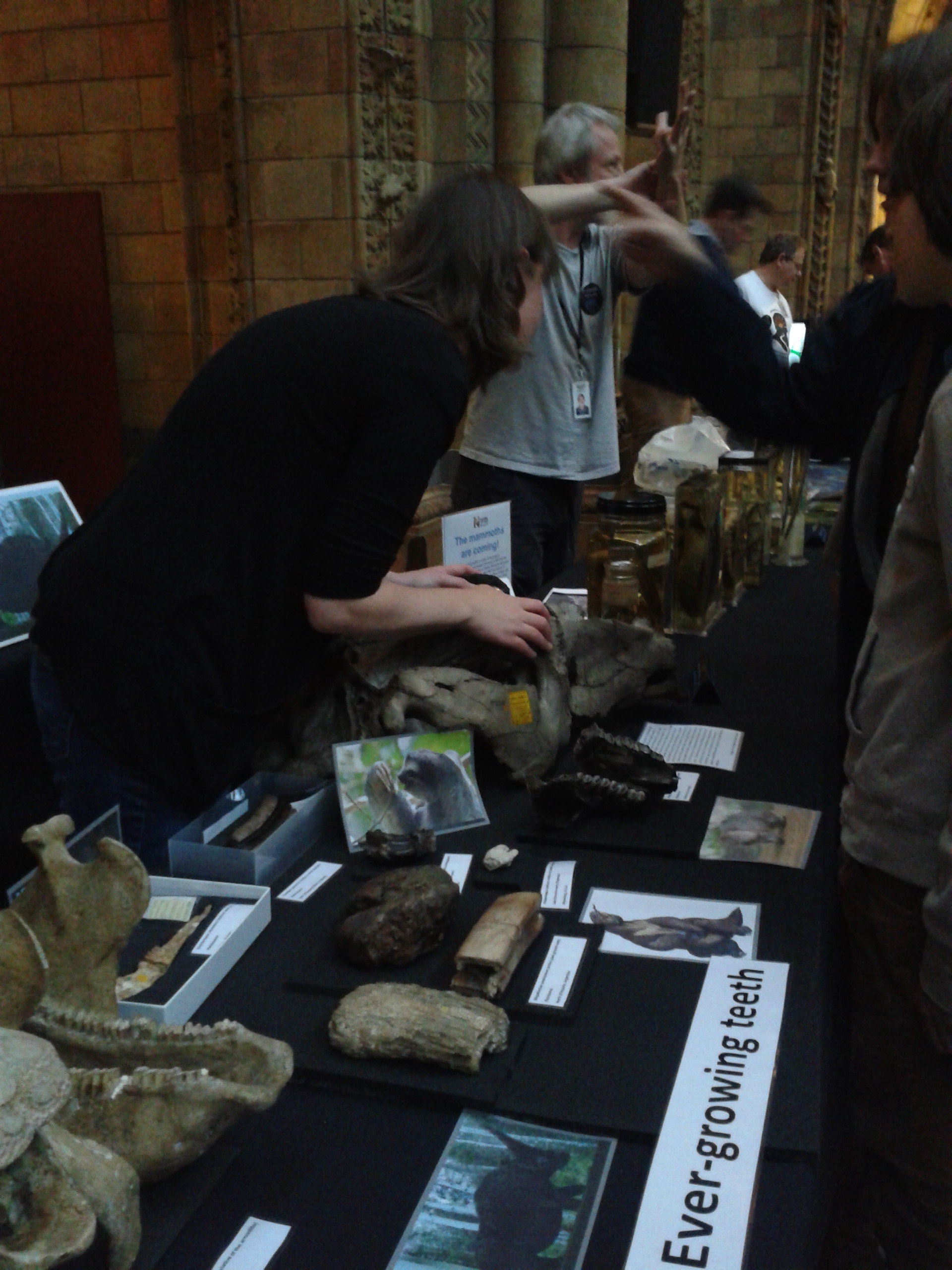
That night I went to the Natural Science Museum for their annual Science Uncovered event and had a blast! The building was filled with stands and kiosks where researchers from the museum brought out their favorite samples and specimens from behind glass to talk about and present to visitors close up. In addition universities and institutes from all over the UK and European Union had stalls and presentations on the work they were doing, the whole point of the event is making scientists available for plebes like me to march up and demand that things be explained.

2013-09-27 18.23.37

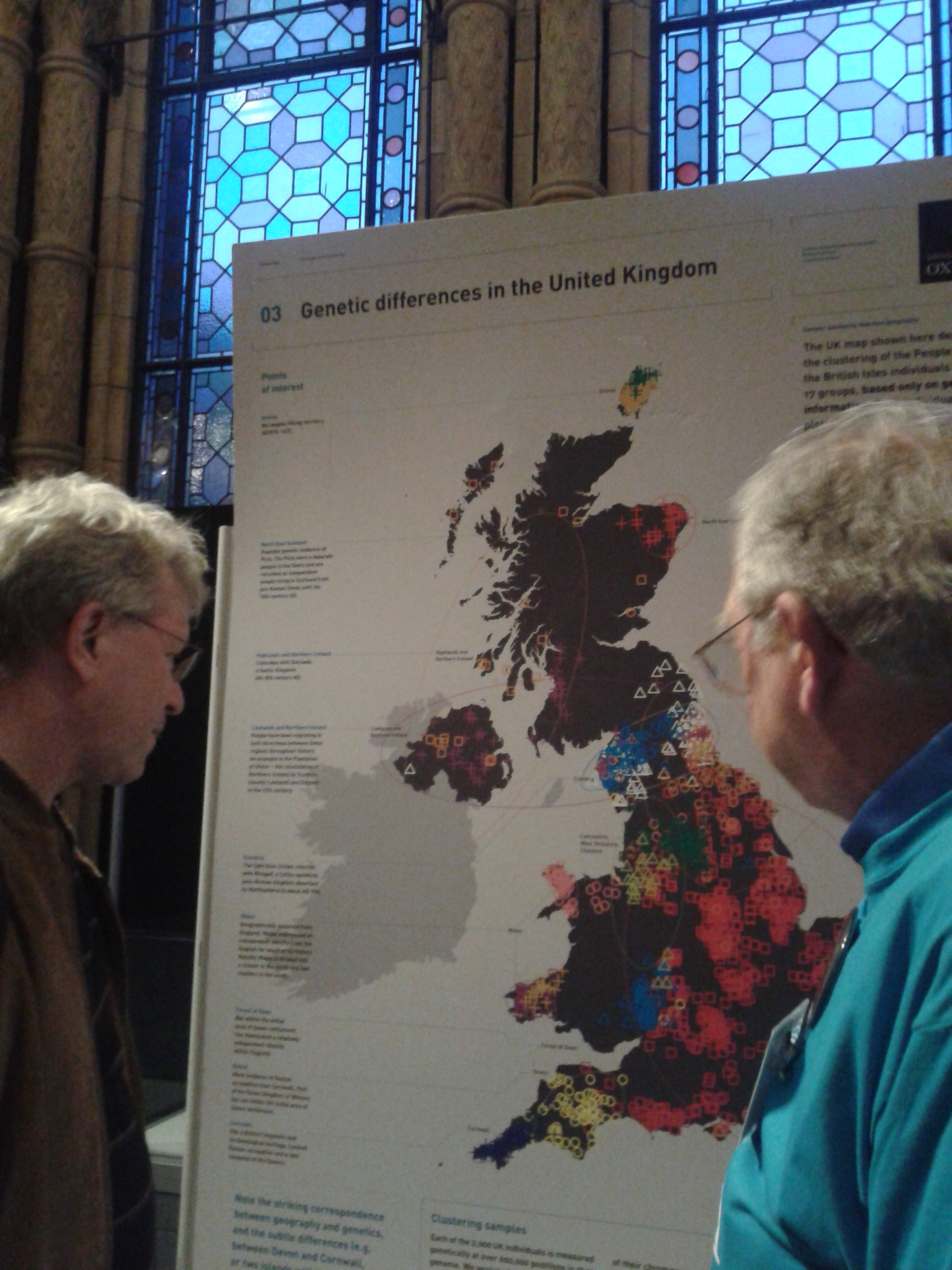
Some of the most memorable people I talked to included a researcher who mapped genetic concentrations of people within the UK and Northern Ireland. For example, apparently the Romans didn’t do much genetic mixing during their stay in Britain, they’ve left virtually no trace. In Wales and Cornwall on the other hand we see some of the highest concentrations, meaning that people from that area tended to stay in that area instead of move around, even after industrialization. There was also a way to check where your family names have been concentrated highest for the last two centuries. Suffice it to say my ancestors on both sides appear to have been genetically slutty and highly mobile, while Jeff comes from a a more rarefied group who stayed concentrated in the south of England like dignified people. This mapping also shows where the family names are concentrated outside of the UK, Virginia and Idaho for Jeff. Australia and Arkansas for me – ozarks and convicts! If ever I wanted proof my blood is trouble, I’ve got it!

2013-09-27 18.58.47

I also spent a good 45 minutes chatting with a researcher who works on kidney disease and found it absolutely fascinating, believe it or not. Turns out that cleaning the blood (while vital to our survival) is only about 5% of what they do, other major tasks include signaling bone marrow to produce new blood cells and cooperating on insulin management. Upon request she took me through the process of dialysis and then explained why it was such a bad treatment in so many ways. I learned ton and it was fun to get one on one knowledge from a person who was unabashedly enthusiastic about their research.

After that I sort of snuck myself into a tour on human evolution and species development which was a lot of fun (fun fact, the tiny percentage of Neanderthal genetic code most people of European descent have swimming around in their chromosomes comes not from the period when Homo Sapiens and Neanderthals were sharing the same areas in Europe, but from several thousand years before when we first met up in the Middle East as we were starting to migrate out of Africa. Apparently after a bit of hanging out together we largely went our separate ways). And then I wandered down the side corridors for the “science on a soapbox” stations, where scientists and researches literally stood on boxes and took questions from onlookers. I heard fascinating mini-lectures on whether the monetization of conservation efforts has been for good or ill,  whether a mission to Mars is even a good idea, a humorous take on popular views of science and scientists, and why the Dodo has been physically misrepresented for centuries.

2013-09-27 18.24.23

It was great fun. It was also kind of hilarious to see how loud and enthusiastic everyone was in a space that’s typically more solemn and quiet. I suspect the plethora of open bars had something to do with it. But if you’re a learning enthusiast and ever in town, it’s a great late night event. There is plenty there for kids as well as adults, the restaurants and cafes are open, and the spirit of inquiry and exploration is actively encouraged. Best of all, it’s free.

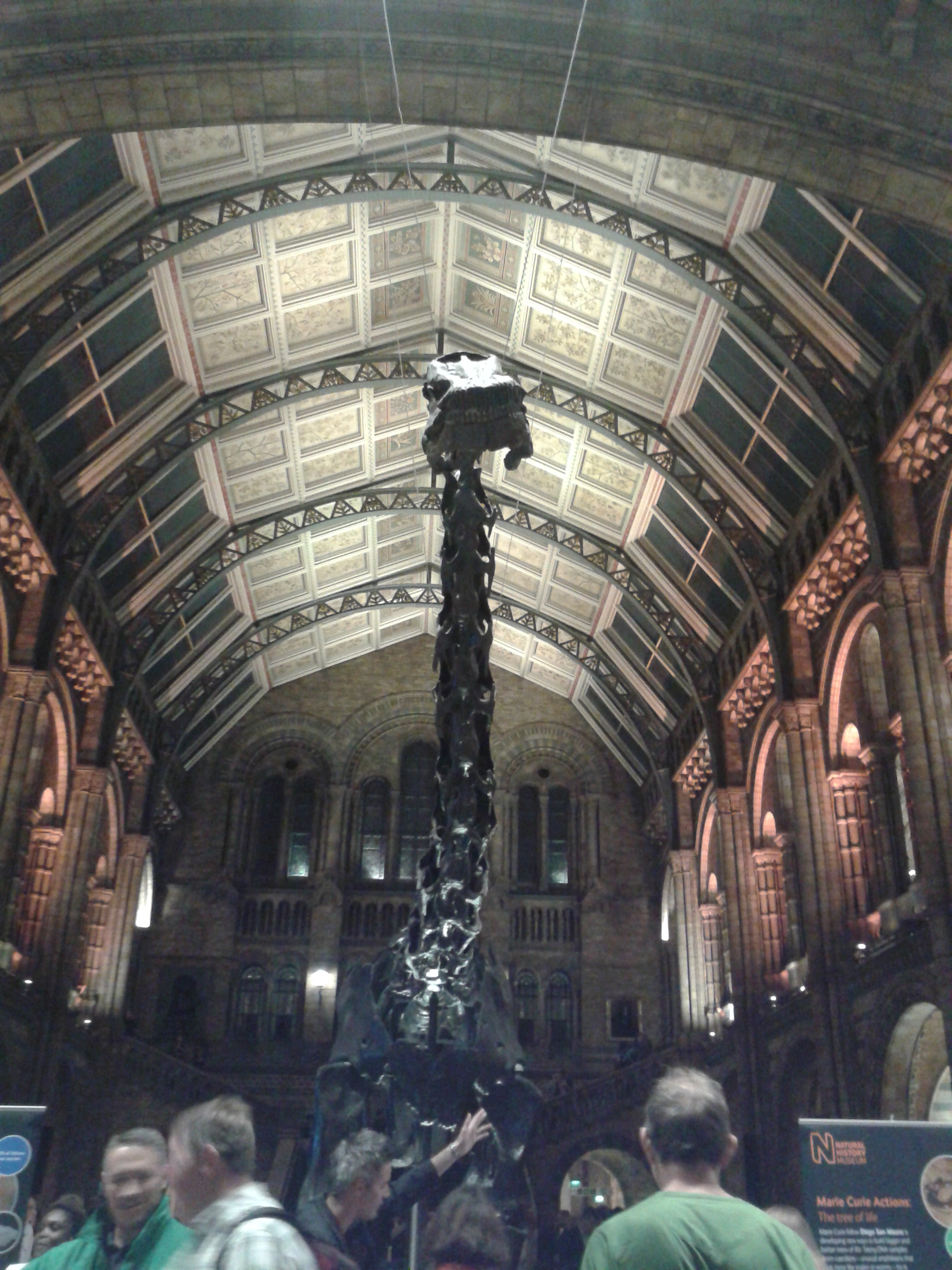
2013-09-27 19.37.31

Dippy (face of the museum and prized Diplodocus) says hi!

The Way We Live Now (or more precisely, where)

“London has the trick of making its past, its long indelible past, always a part of its present. And for that reason it will always have meaning for the future, because of all it can teach about disaster, survival, and redemption. It is all there in the streets.”
― Anna Quindlen, Imagined London: A Tour of the World’s Greatest Fictional City

Ducklings and gentle-kittens, let me make you welcome to Bermondsey.

It’s on the south side of the Thames, a place that has been through the centuries a holy area, a posh area, and a slum area. A large abbey once stood here with royal ties back to the conquest. Apparently Henry II and Eleanor of Aquitaine held a Christmas court here (presumably more amiable than the one portrayed in The Lion in Winter…), and Elizabeth Woodville retired there along with Henry VII’s blessing after he married her daughter. As usually happened to these presumably impressive buildings, Henry VIII dissolved the Abbey and gave the land to his friend. The Stuarts poshed it up after the Great Fire, but it sank into decay. In the 19th century, the docks and industrialization made things a bit grim.

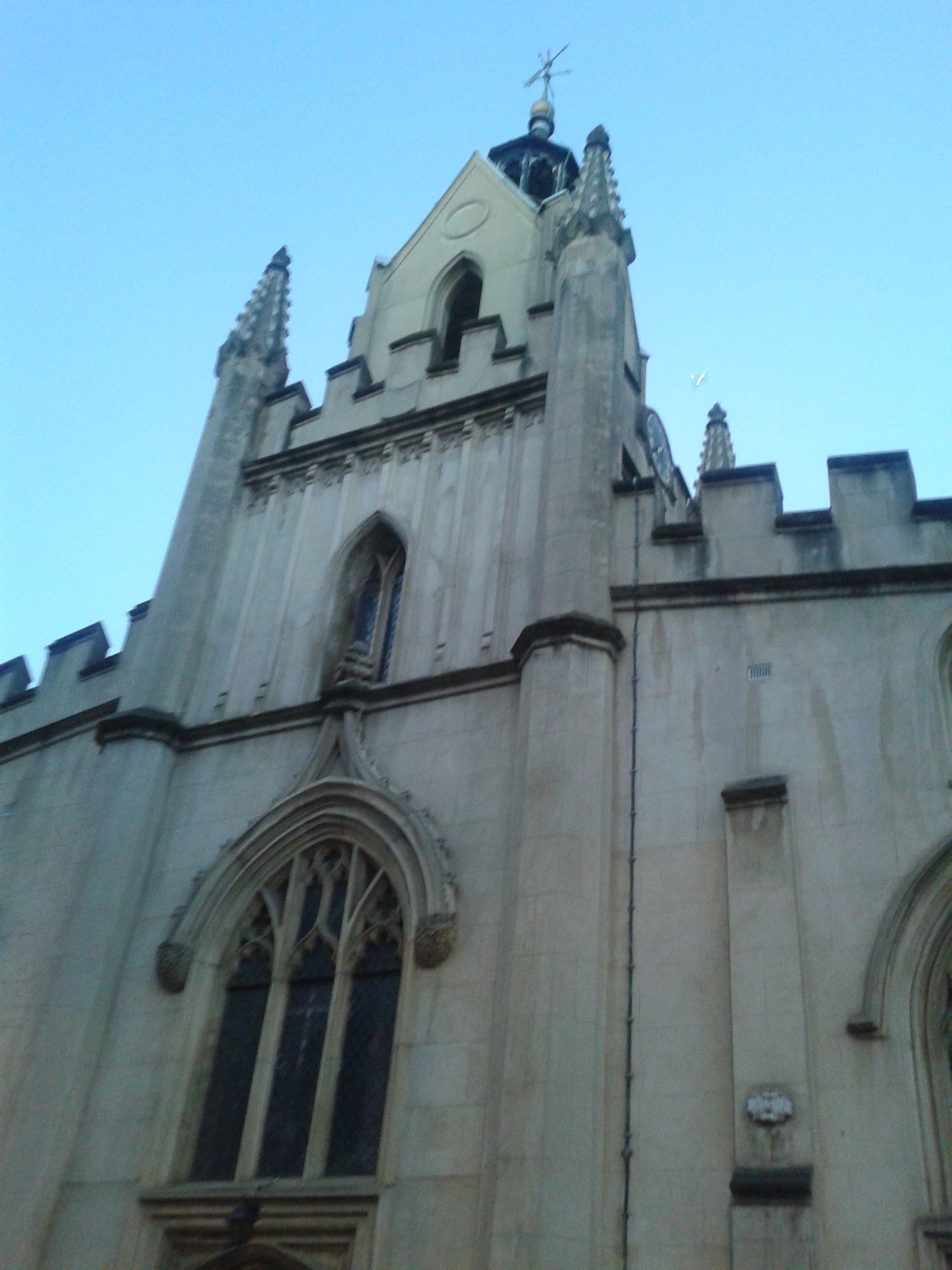
2013-09-22 19.15.59

This church, built in the 17th century even though a church has been recorded on this sight for well over a thousand years, is the parish church of St. Mary Magdalen.

Charles Dickens described the area near here thusly,  “… crazy wooden galleries common to the backs of half a dozen houses, with holes from which to look upon the slime beneath; windows, broken and patched, with poles thrust out, on which to dry the linen that is never there; rooms so small, so filthy, so confined, that the air would seem to be too tainted even for the dirt and squalor which they shelter; wooden chambers thrusting themselves out above the mud and threatening to fall into it — as some have done; dirt-besmeared walls and decaying foundations, every repulsive lineament of poverty, every loathsome indication of filth, rot, and garbage…”

Quality!

Luckily these days Bermondsey is undergoing a nice little resurgence and we’re really enjoying living here. Huge masses of it was bombed and rebuilt after WWII so it’s relatively recent (compared to a surprising amount of London). Our plumbing is only from the last century instead of the one before – this is cause for rejoicing, trust me!

We’re in Southwark, one of the oldest parts of London – the area from which Chaucer’s pilgrims departed for Canterbury is just a Tube station away, Shakespeare’s Globe theatre is in the same direction. To the east lies the dock where the Mayflower departed for Southampton to meet up with its dour and disapproving paying passengers heading for the New World. The dock where they hanged pirates in the 18th century is nearby. There are excellent restaurants, Bermondsey’s famous antique market, and of course the river.

We also live a 15-20’s minute’s leisurely stroll from Tower Bridge.

2013-09-22 20.05.22

I think you’ll excuse me, minions, if I say that I’m vastly contended and downright giddy about this in a lot of ways. Not too bad, huh!

*all images original to Small Dog Syndrome

Louisa

“I know of no way of judging of the future but by the past.”
― Patrick Henry

When politicians talk about small town America, this is what they mean. I’m also convinced few of them spend any substantial time in them. I may be a city girl at heart, but it’s kind of great to know that places like this actually still exist tucked away and plugging along much as they always have.

IMG_0266

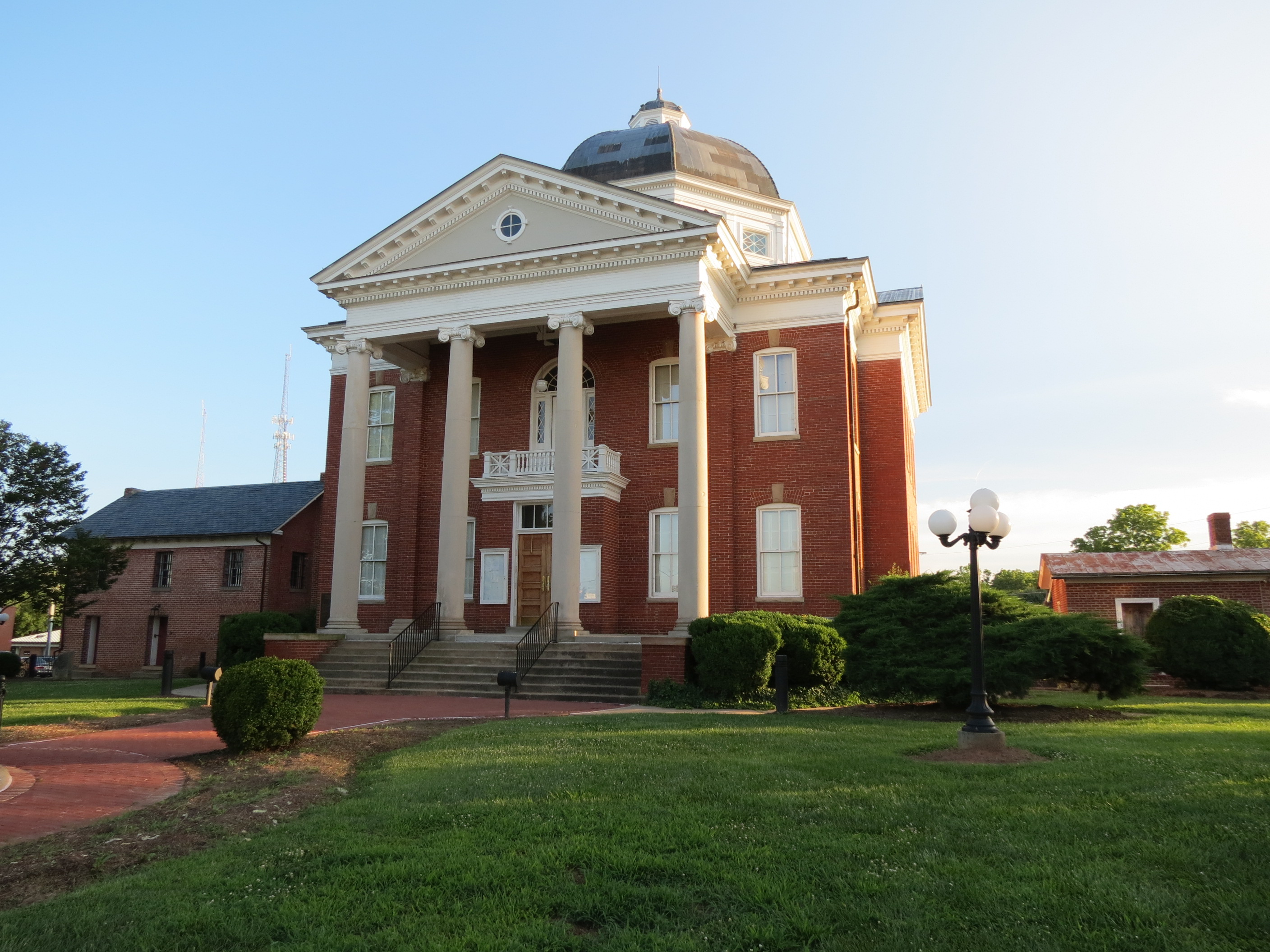
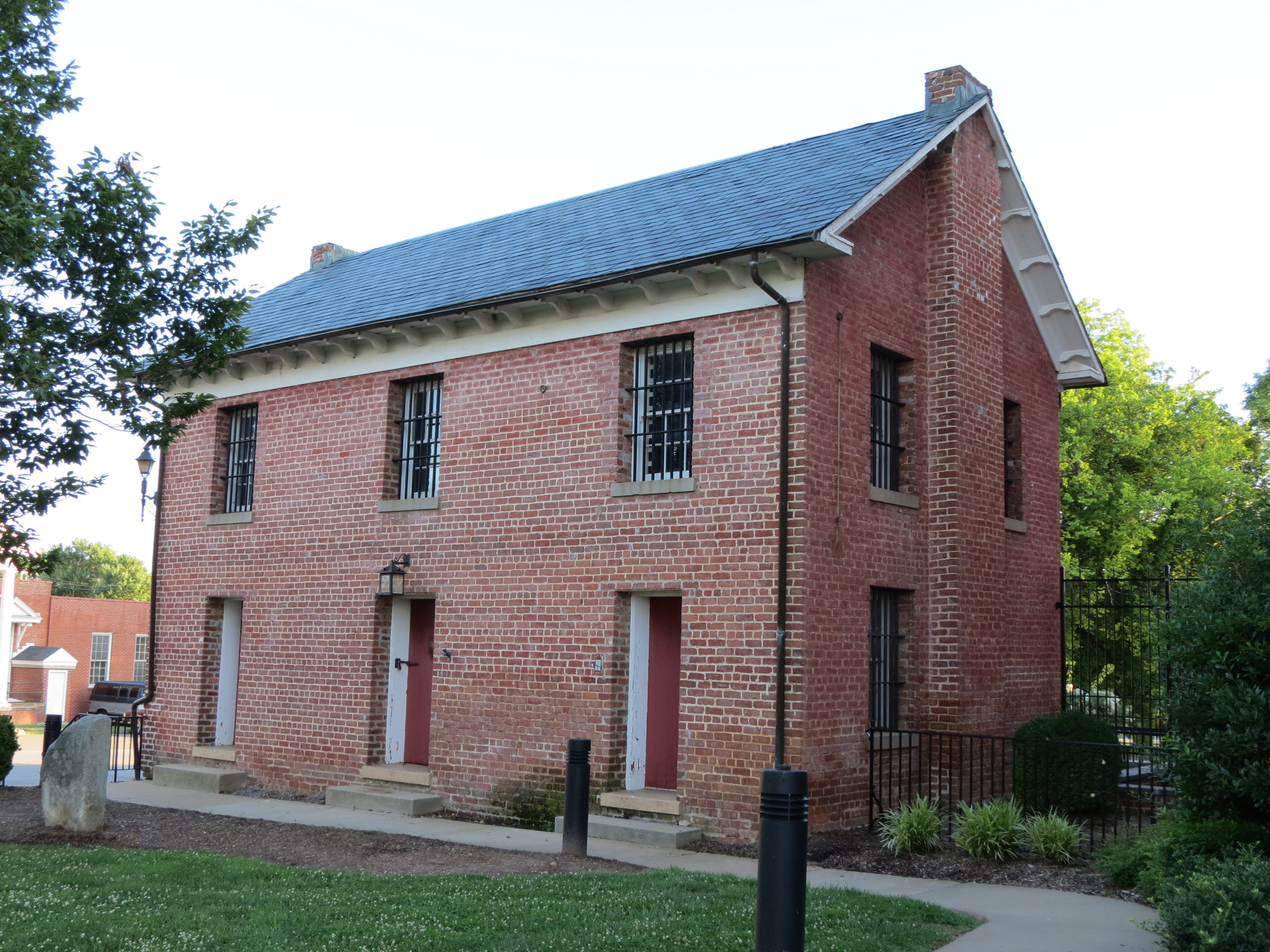
The historic courthouse and jail to the left. To this day, property auctions take place on the steps.

This courthouse is a bit later, but Louisa’s major claim to fame is that Patrick Henry began his law career here (his first big case was part of the lead up to the Revolution, when King George vetoed a Virginia law in question which the colonists saw as an overstep into their legislative authority. The rest is, extremely well recorded, history). Later he was elected to the Virginia House of Burgesses to represent the county, where he kicked off his political one.

IMG_0268

The jailhouse which operated into the early 20th century and was apparently ranked as one of the worst in the country – because in its long history, it wasn’t renovated in any significant way. Rustic charm is all well and good, but not when you’re locked up, apparently. It’s a pretty good representation of 19th century local justice.

IMG_0271

Typical local hours. Very few things can afford to be open all day, every day around here.

IMG_0272

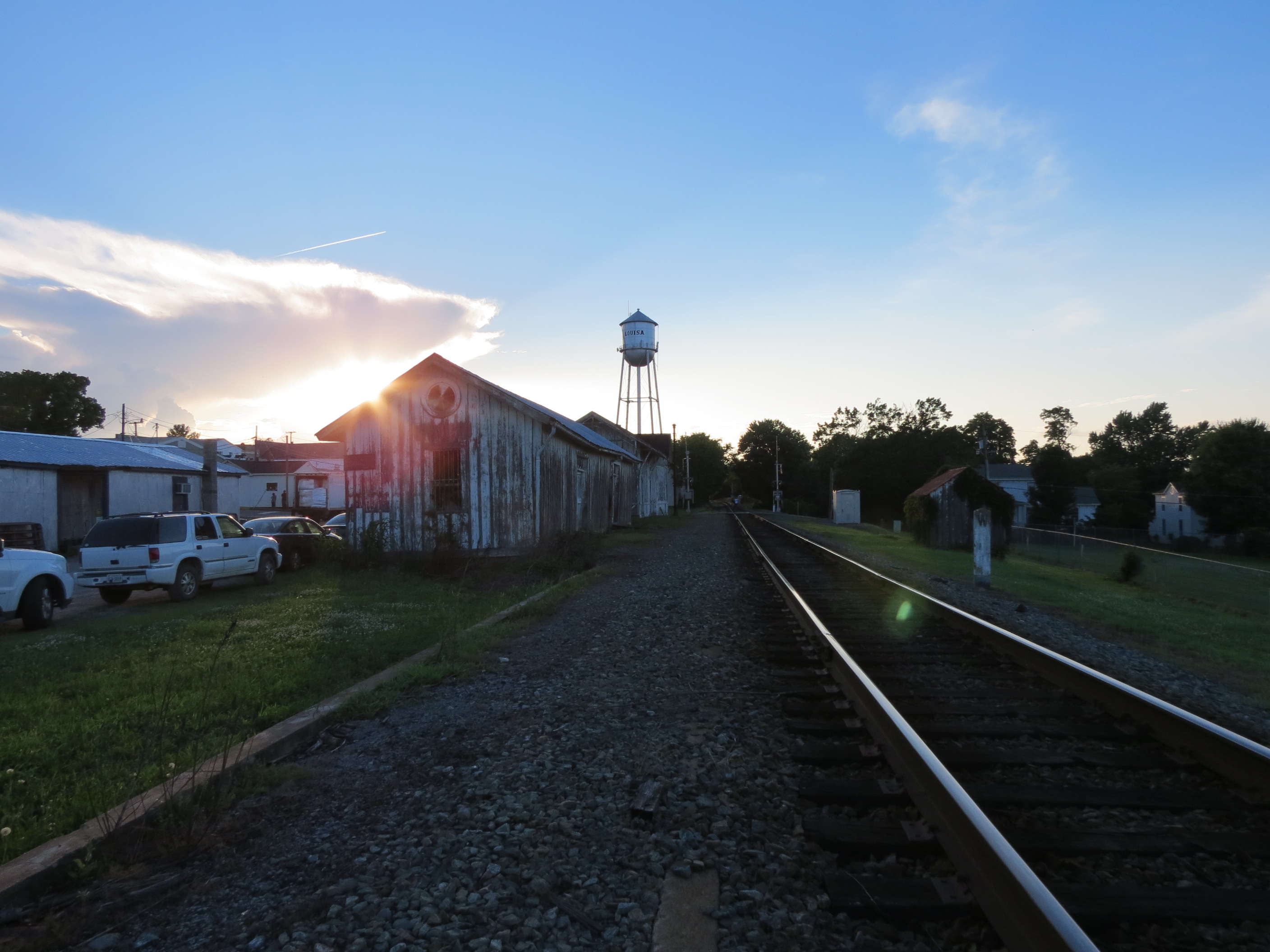
During the Civil War, the railroad was a major Confederate supply line, meaning that battles were fought all over the place. The railroad was also supposed to bring a degree of prosperity that, unfortunately, didn’t really make it into the 20th century. The rail station on the left has beautifully worked gables and was clearly once quite nice, but now it’s boarded up and empty except when the local feed store uses it for storage.

IMG_0279

Past Education

“Wisdom is not a product of schooling but of the lifelong attempt to acquire it.”
― Albert Einstein

Want to see a typical schoolhouse for most of rural America for the better part of two centuries? Brace yourself:

IMG_0280

That thing is, no exaggeration, smaller than most garden sheds I’ve seen. I went to high school in what used to be a WWII weather station, graduating class of 60 students max. Tiny by most suburban measurements (Jeff, for example had a graduating class bigger than my entire school combined). And even I can’t even wrap my head around school in a closet.

Nomenclature

“Puritanism.  The haunting fear that someone, somewhere, may be happy.”
– H.L. Mencken

Recently, for reasons far too ridiculous and complicated to explain, Scarlett and I have a bit of an inside joke ending emails and phone calls with some sort of admonition followed by, “or God will smite thee.”  Have a good day, or God will smite thee, etc.  It’s silly and stems from a midnight conversation when her flatmates were getting drunk and crowding up her New York flat so she hung out in the hallway and called me up to chat until they descended on Greenwich Village.   Many an inside joke has found it’s birth in such events.

Anyway, it put me in a sacrilegious frame of mind, so these Puritan baby names made for a good Friday afternoon read.  Let’s have a look at some of these poor parenting choices and make a few guesses on how the Early Modern era panned out for them, based on their unfortunate epithets:

I disapprove strongly of this frivolity.

Wrestling Brewster, I can only surmise, turned out to be the dame school class bully.

Kill-sin Pimple, to no one’s surprise, ran off to live in the woods and found happiness among the Iroquois.

Continent Walker, a great colonial explorer.  Annoyed his relatives by insisting on dressing “in the manner of the heathens” in the privacy of his own home.

Preserved Fish refused all pickled food for the entirety of her life.

Anger Bull was unfortunately prone to fits of rage at the sight of red flags.  Laudanum helped.

Magnyfye Beard was appropriately enough, one of history’s earliest hipsters.  His whiskers were the pride of the early cavaliers.

Hope-still Peedle.  Pessimist.

Weakly Ekins: picked on in school.  Probably by Wrestling Brewster.

If-Christ-had-not-died-for-thee-thou-hadst-been-damned (known familiarly as “Dr. Damned”) Barebone, never really understood why his medical practice never did very well.  Scraped by as a body snatcher for the burgeoning field of anatomy and made many, sadly unrecognized, contributions to science.

Let’s play a game: pick a name, submit their life story in three sentences or less.  Winner get applause and acclaim from the minion coterie.  Off you go.  (Or God will smite thee!)

Ten Years On

Whoever fights monsters should see to it that in the process he does not become a monster.  And when you look long into an abyss, the abyss also looks into you.
– Friedrich Nietsche, Beyond Good and Evil

In 2001 my family lived on an American military base on a godforsaken little island in the middle of the Pacific ocean.  The joys of government service, n’est pas?

My day began at 4:30am when I and two other kids attended an early morning meeting for teenagers.  Only one of us had a driver’s license so we carpooled together to this meeting, back again to catch a bus at 6:30.  The island was tiny but the roads were so bad that it took over an hour to get just 30 miles to our school.  I got out of school at 2:30pm, then had soccer practice until 5pm, and then back onto the bus for a ride that zigzagged back home and took longer than the initial ride to school did.  I stumbled through the doors sometime between 7 and 8pm, did homework, and fell into bed.  I was a shockingly well behaved teenager, but in retrospect that might have been because I was consistently exhausted.

September 11, 2001 didn’t start out too differently.  That morning I climbed yawning into the car and the three of us drove off to our meeting.  As we passed through the gates we noticed far more men in camouflage than usual, but chalked it up to some sort of training exercise and weren’t too alarmed when the heavy bars slid shut behind us.

But when we got to our destination, the youth leader was standing outside her car.  Shivering.  On a tropical island.  The three of us braced for bad news, but even we weren’t prepared to be told that the United States had apparently been attacked.

Remember, we lived on a base and our parents were employed in the military  or government of various countries.  A million thoughts ran through my head: Are we at war?  Will my family be separated?  Will they send me and my siblings away?  Is it even safe to travel?  We have dozens of planes and ships stationed here – are we a target?  And then, finally, how will I get home?

We weren't let off the base for days. And those of us who didn't have work to distract us watched this, over and over again, for a week.

It turns out that the base had utterly shut down, we could get off, but they weren’t letting anyone back on.  But we had a secret weapon, my Dad’s considerable rank.  We called him and he escorted us on base, and when we were stopped at the gates and denied entry, my usually mild mannered father snapped, “This is my daughter and she is coming in.”

That was when the fear really hit me.

10 years later that fear has actually largely dissipated.  The world is the way it is.  The nature of my father’s profession meant that we were frequent travelers and though the fear of terrorists never stopped me from getting on a plane, it would a lie to say that it never intruded on my travel thoughts and plans.    I grew up in government and military circles which has meant that for the past ten years much of the people I knew were at war or at least directly affected by it, and not in ways confined to CNN or BBC news blips.

And now, 10 years later, the man who largely masterminded that day is dead.

It’s odd, especially since our hatred and fear of him has cooled somewhat.  Mine has anyway.  We’ve had other things to think about.  Recessions, booms, elections, family, going to university, getting married, finding a job, etc.  My life moved on while he hid in a mountain somewhere, hiding from half of the world and shunned even by some of his former allies who found that supporting him came at too frightening a cost (“Yes, of course we’re still pals, Osama, but the tanks are really mucking up the neighborhood so we’ll have to see less of each other…”). 10 years later an uprising of people, largely my age, overthrew tyrannical governments in his area of the world, or are still struggling to do so.  They are the post 9/11 generation too.

Part of me thinks he should have had a trial and be made to face his victims.  Part of me thinks that you can’t make a man who believes with all his soul that his vendetta of violence and blood is good realize that it is evil, no matter how many witnesses you call.  Part of me thinks an assassination is a cowards way out, and part of me is fiercely glad he wasn’t treated like a leader or military commander but as the rogue operative he was.  And part of me wonders if a man like him actually dies – he’s at the bottom of the sea, but his network is thriving and hate and ignorance are still winning in many parts of the world.

Frankly, happy in many ways as I am (and isn’t that an odd thing, to be happy because one man in six billion is dead!), it’s odd to live in a world without him.  He epitomized treachery and evil, now he is gone.  But not really.   He is dead, his ideology is not.

History Nerd Chortle

“I have not always in my dealings with General de Gaulle found quotations from Trafalgar and Waterloo necessarily productive, and he has been very tactful about the Battle of Hastings.”
– Harold Wilson

Apparently there is a particular zoo in Germany housing a penguin by the name of Bonaparte.  He has, against all the rules of biology, genetics, and common sense, fallen in love with a black and white Wellington boot.

An event only the truly nerdiest of history nerds can appreciate.

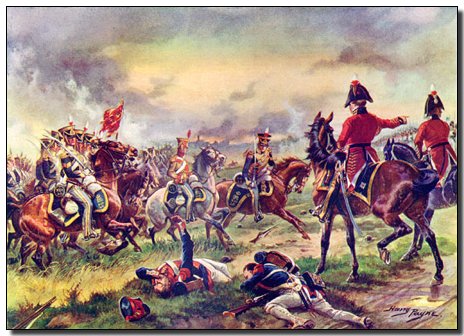
First Battalion, King's Own Penguins advance!