Category: History

Night at the Museum

“I wonder if we are seeing a return to the object in the science-based museum. Since any visitor can go to a film like Jurassic Park and see dinosaurs reawakened more graphically than any museum could emulate, maybe a museum should be the place to have an encounter with the bony truth. Maybe some children have overdosed on simulations on their computers at home and just want to see something solid–a fact of life.”
― Richard Fortey, Dry Store Room No. 1: The Secret Life Of The Natural History Museum

The weeks are passing so quickly these days that it’s a little breathtaking, we glance up and it’s the last day of September already.

On Friday I went to the Bermondsey Antique Market, partly to find a wedding present for a freelancing client who has become a good friend, and partly because I was finally over that cold and needed to just get out of the house for a walk. Luckily I emerged victorious and with a croissant in hand. Breakfast of champions. The Bermondsey market is tiny compared to it’s more famous cousin Portobello Road, it all fits into one square, but the quality of goods is very comparable (and frankly some of the prices are loads better). The antique silver is excellent and some of the jewelry blew me away. There are also excellent niche stalls with pieces from the Far East, vintage clothing, and a fun group who collects and sell mid-century furniture. Friends should prepare themselves to receive Bermondsey Market’s offerings for a myriad of birthdays and holidays.

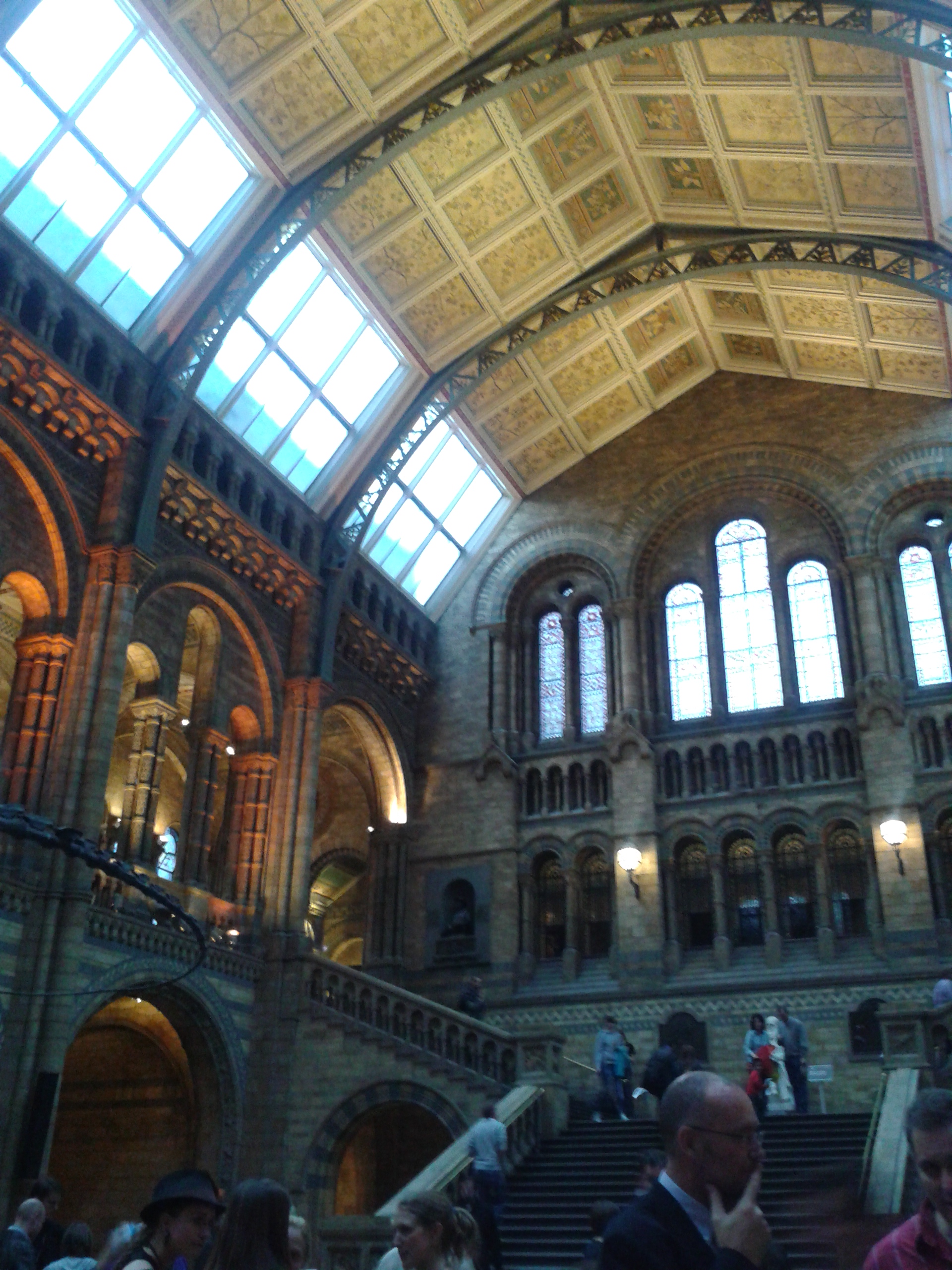
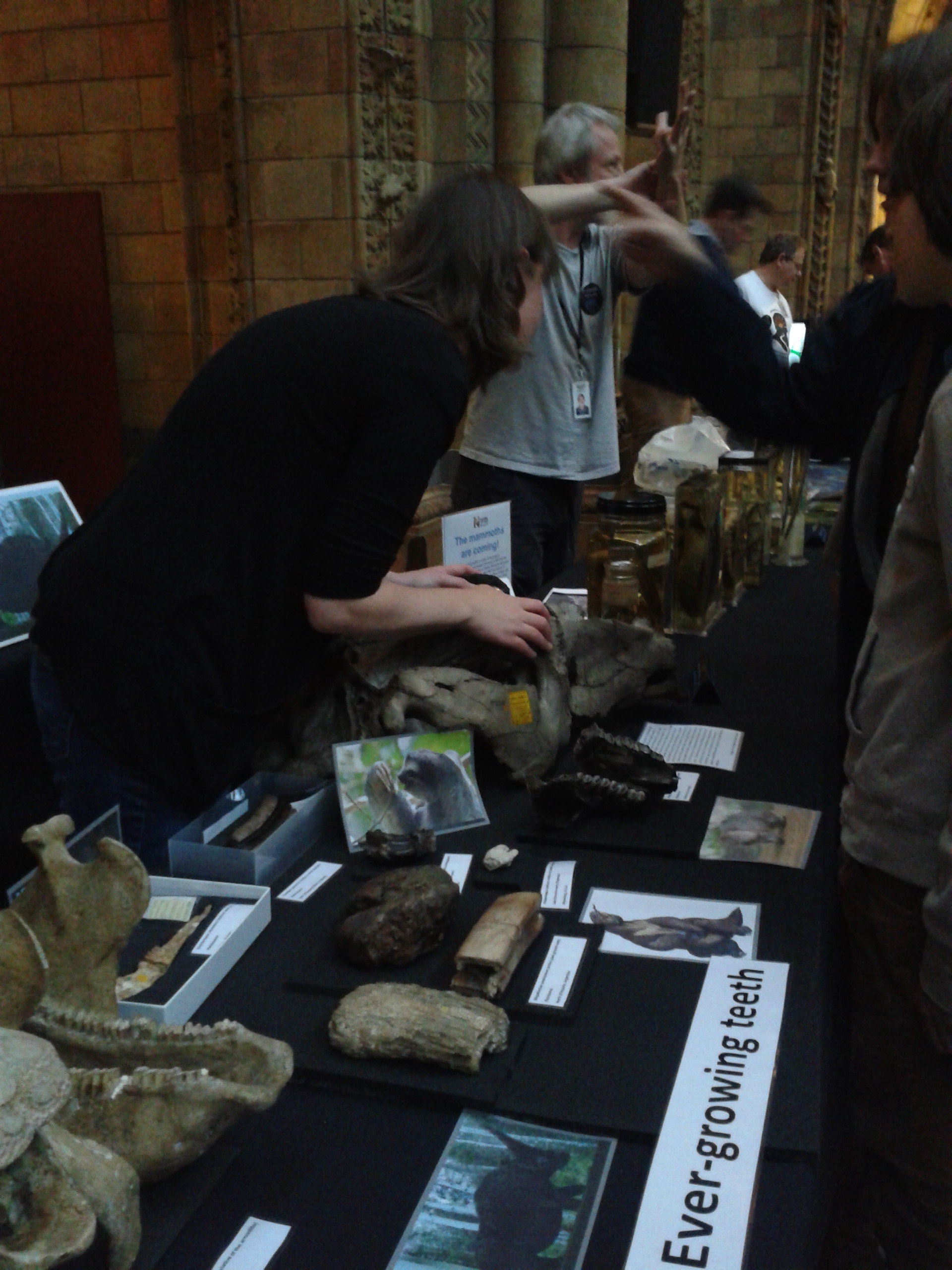
That night I went to the Natural Science Museum for their annual Science Uncovered event and had a blast! The building was filled with stands and kiosks where researchers from the museum brought out their favorite samples and specimens from behind glass to talk about and present to visitors close up. In addition universities and institutes from all over the UK and European Union had stalls and presentations on the work they were doing, the whole point of the event is making scientists available for plebes like me to march up and demand that things be explained.
2013-09-27 18.23.37

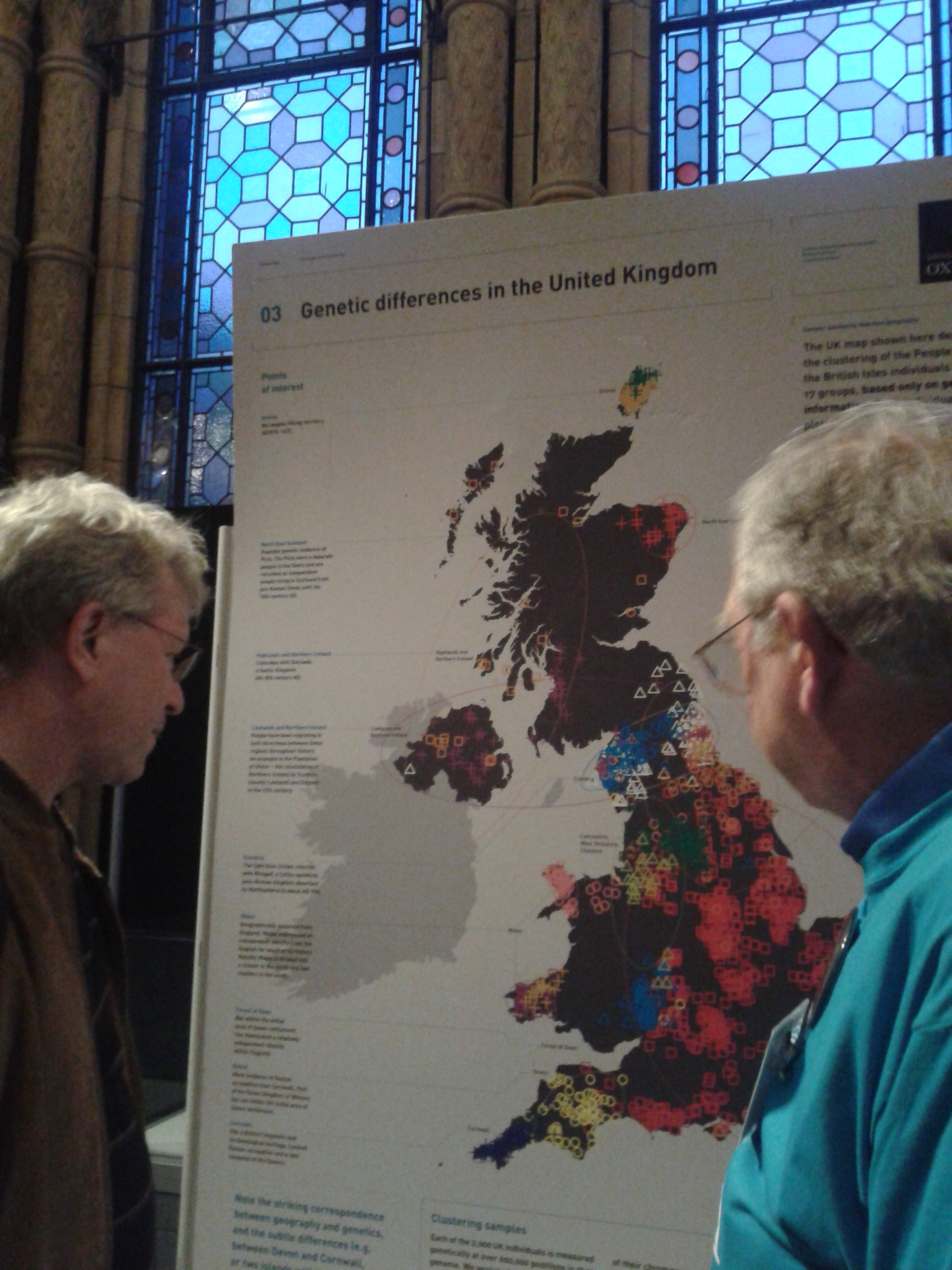
Some of the most memorable people I talked to included a researcher who mapped genetic concentrations of people within the UK and Northern Ireland. For example, apparently the Romans didn’t do much genetic mixing during their stay in Britain, they’ve left virtually no trace. In Wales and Cornwall on the other hand we see some of the highest concentrations, meaning that people from that area tended to stay in that area instead of move around, even after industrialization. There was also a way to check where your family names have been concentrated highest for the last two centuries. Suffice it to say my ancestors on both sides appear to have been genetically slutty and highly mobile, while Jeff comes from a a more rarefied group who stayed concentrated in the south of England like dignified people. This mapping also shows where the family names are concentrated outside of the UK, Virginia and Idaho for Jeff. Australia and Arkansas for me – ozarks and convicts! If ever I wanted proof my blood is trouble, I’ve got it!
2013-09-27 18.58.47

I also spent a good 45 minutes chatting with a researcher who works on kidney disease and found it absolutely fascinating, believe it or not. Turns out that cleaning the blood (while vital to our survival) is only about 5% of what they do, other major tasks include signaling bone marrow to produce new blood cells and cooperating on insulin management. Upon request she took me through the process of dialysis and then explained why it was such a bad treatment in so many ways. I learned ton and it was fun to get one on one knowledge from a person who was unabashedly enthusiastic about their research.

After that I sort of snuck myself into a tour on human evolution and species development which was a lot of fun (fun fact, the tiny percentage of Neanderthal genetic code most people of European descent have swimming around in their chromosomes comes not from the period when Homo Sapiens and Neanderthals were sharing the same areas in Europe, but from several thousand years before when we first met up in the Middle East as we were starting to migrate out of Africa. Apparently after a bit of hanging out together we largely went our separate ways). And then I wandered down the side corridors for the “science on a soapbox” stations, where scientists and researches literally stood on boxes and took questions from onlookers. I heard fascinating mini-lectures on whether the monetization of conservation efforts has been for good or ill,  whether a mission to Mars is even a good idea, a humorous take on popular views of science and scientists, and why the Dodo has been physically misrepresented for centuries.
2013-09-27 18.24.23

It was great fun. It was also kind of hilarious to see how loud and enthusiastic everyone was in a space that’s typically more solemn and quiet. I suspect the plethora of open bars had something to do with it. But if you’re a learning enthusiast and ever in town, it’s a great late night event. There is plenty there for kids as well as adults, the restaurants and cafes are open, and the spirit of inquiry and exploration is actively encouraged. Best of all, it’s free.
2013-09-27 19.37.31

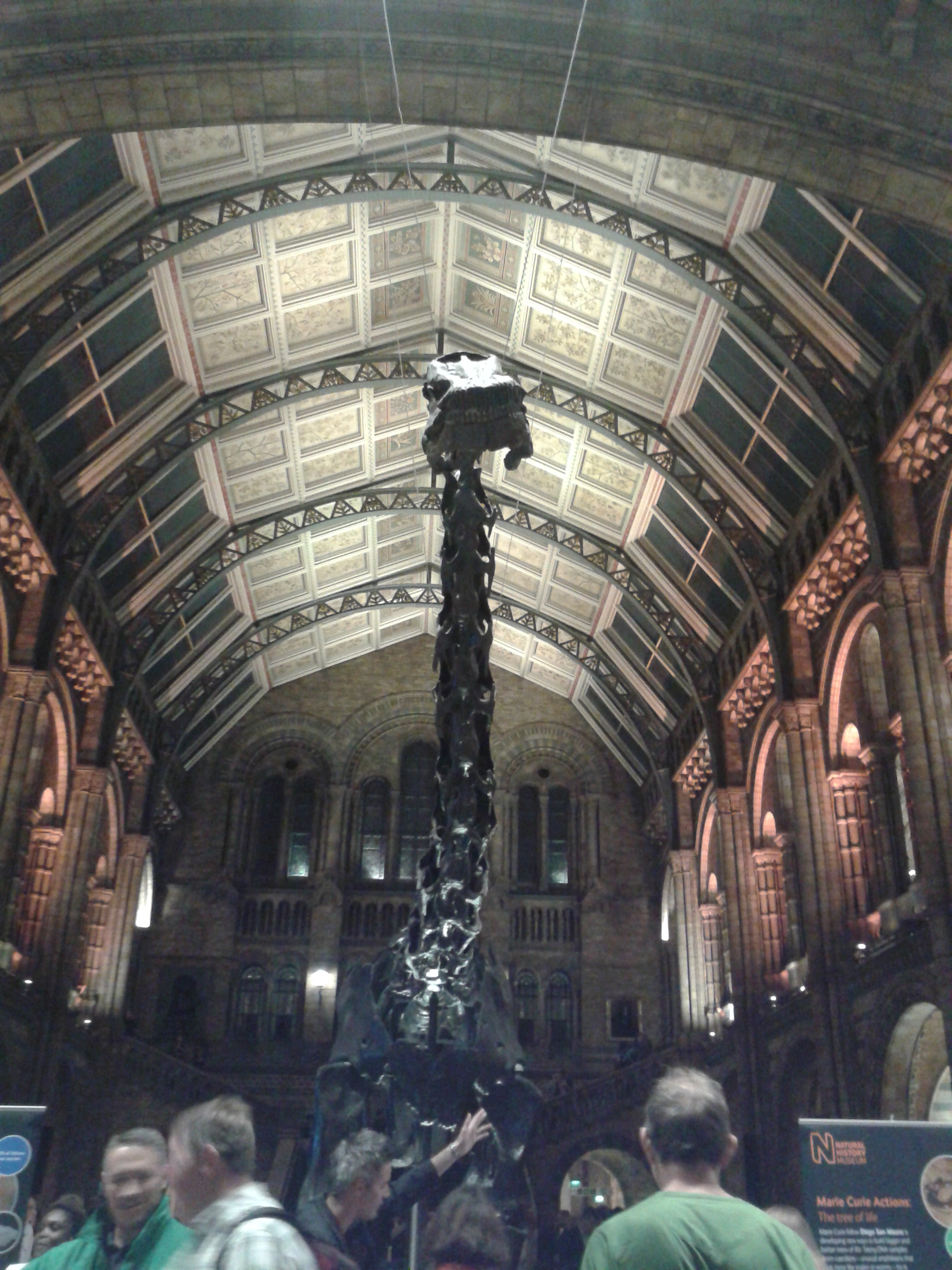
Dippy (face of the museum and prized Diplodocus) says hi!
The Way We Live Now (or more precisely, where)

“London has the trick of making its past, its long indelible past, always a part of its present. And for that reason it will always have meaning for the future, because of all it can teach about disaster, survival, and redemption. It is all there in the streets.”
― Anna Quindlen, Imagined London: A Tour of the World’s Greatest Fictional City

Ducklings and gentle-kittens, let me make you welcome to Bermondsey.

It’s on the south side of the Thames, a place that has been through the centuries a holy area, a posh area, and a slum area. A large abbey once stood here with royal ties back to the conquest. Apparently Henry II and Eleanor of Aquitaine held a Christmas court here (presumably more amiable than the one portrayed in The Lion in Winter…), and Elizabeth Woodville retired there along with Henry VII’s blessing after he married her daughter. As usually happened to these presumably impressive buildings, Henry VIII dissolved the Abbey and gave the land to his friend. The Stuarts poshed it up after the Great Fire, but it sank into decay. In the 19th century, the docks and industrialization made things a bit grim.

2013-09-22 19.15.59

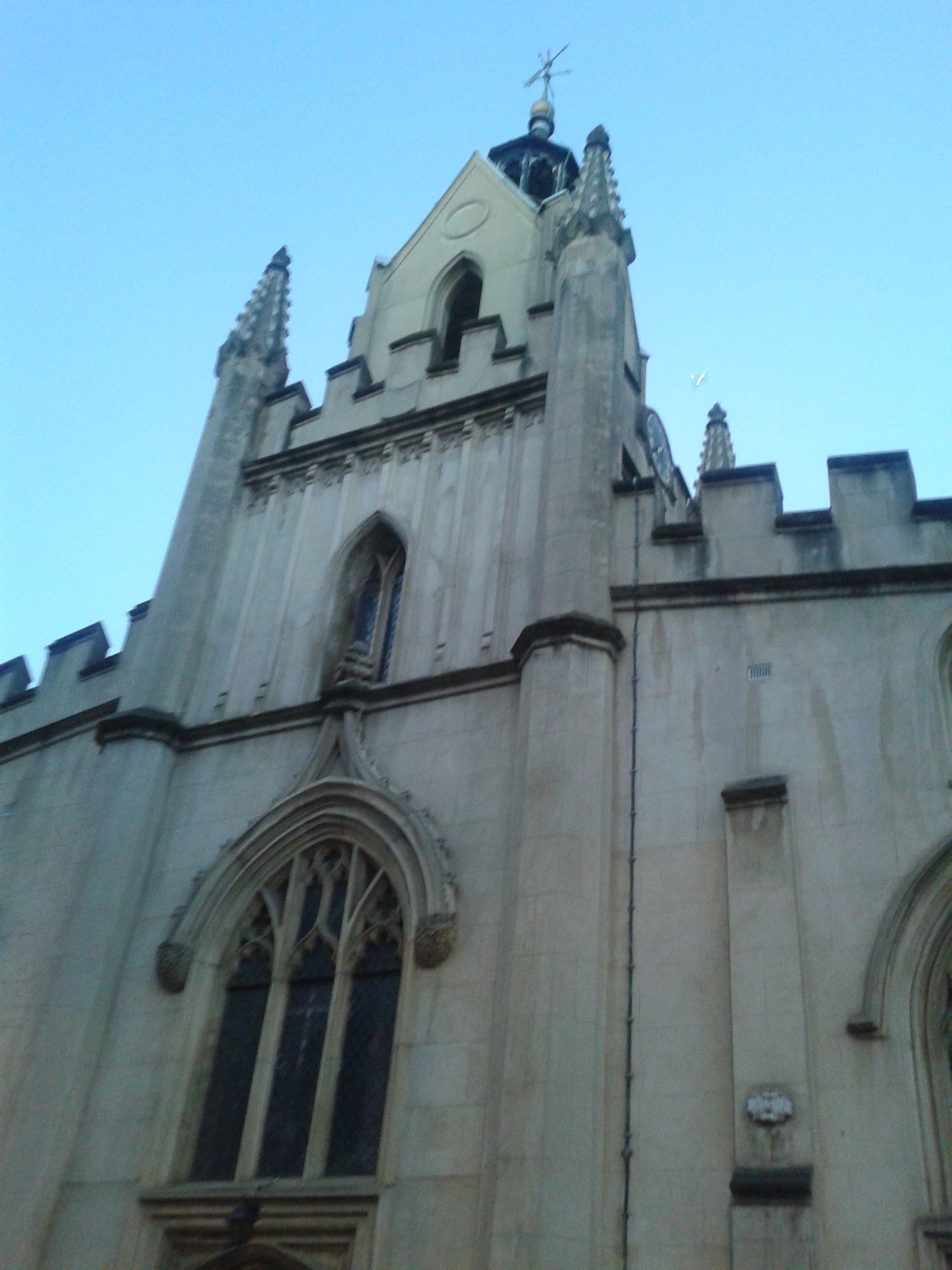
This church, built in the 17th century even though a church has been recorded on this sight for well over a thousand years, is the parish church of St. Mary Magdalen.

Charles Dickens described the area near here thusly,  “… crazy wooden galleries common to the backs of half a dozen houses, with holes from which to look upon the slime beneath; windows, broken and patched, with poles thrust out, on which to dry the linen that is never there; rooms so small, so filthy, so confined, that the air would seem to be too tainted even for the dirt and squalor which they shelter; wooden chambers thrusting themselves out above the mud and threatening to fall into it — as some have done; dirt-besmeared walls and decaying foundations, every repulsive lineament of poverty, every loathsome indication of filth, rot, and garbage…”

Quality!

Luckily these days Bermondsey is undergoing a nice little resurgence and we’re really enjoying living here. Huge masses of it was bombed and rebuilt after WWII so it’s relatively recent (compared to a surprising amount of London). Our plumbing is only from the last century instead of the one before – this is cause for rejoicing, trust me!

We’re in Southwark, one of the oldest parts of London – the area from which Chaucer’s pilgrims departed for Canterbury is just a Tube station away, Shakespeare’s Globe theatre is in the same direction. To the east lies the dock where the Mayflower departed for Southampton to meet up with its dour and disapproving paying passengers heading for the New World. The dock where they hanged pirates in the 18th century is nearby. There are excellent restaurants, Bermondsey’s famous antique market, and of course the river.

We also live a 15-20’s minute’s leisurely stroll from Tower Bridge.

2013-09-22 20.05.22

I think you’ll excuse me, minions, if I say that I’m vastly contended and downright giddy about this in a lot of ways. Not too bad, huh!

*all images original to Small Dog Syndrome

Louisa

“I know of no way of judging of the future but by the past.”
― Patrick Henry

When politicians talk about small town America, this is what they mean. I’m also convinced few of them spend any substantial time in them. I may be a city girl at heart, but it’s kind of great to know that places like this actually still exist tucked away and plugging along much as they always have.

IMG_0266

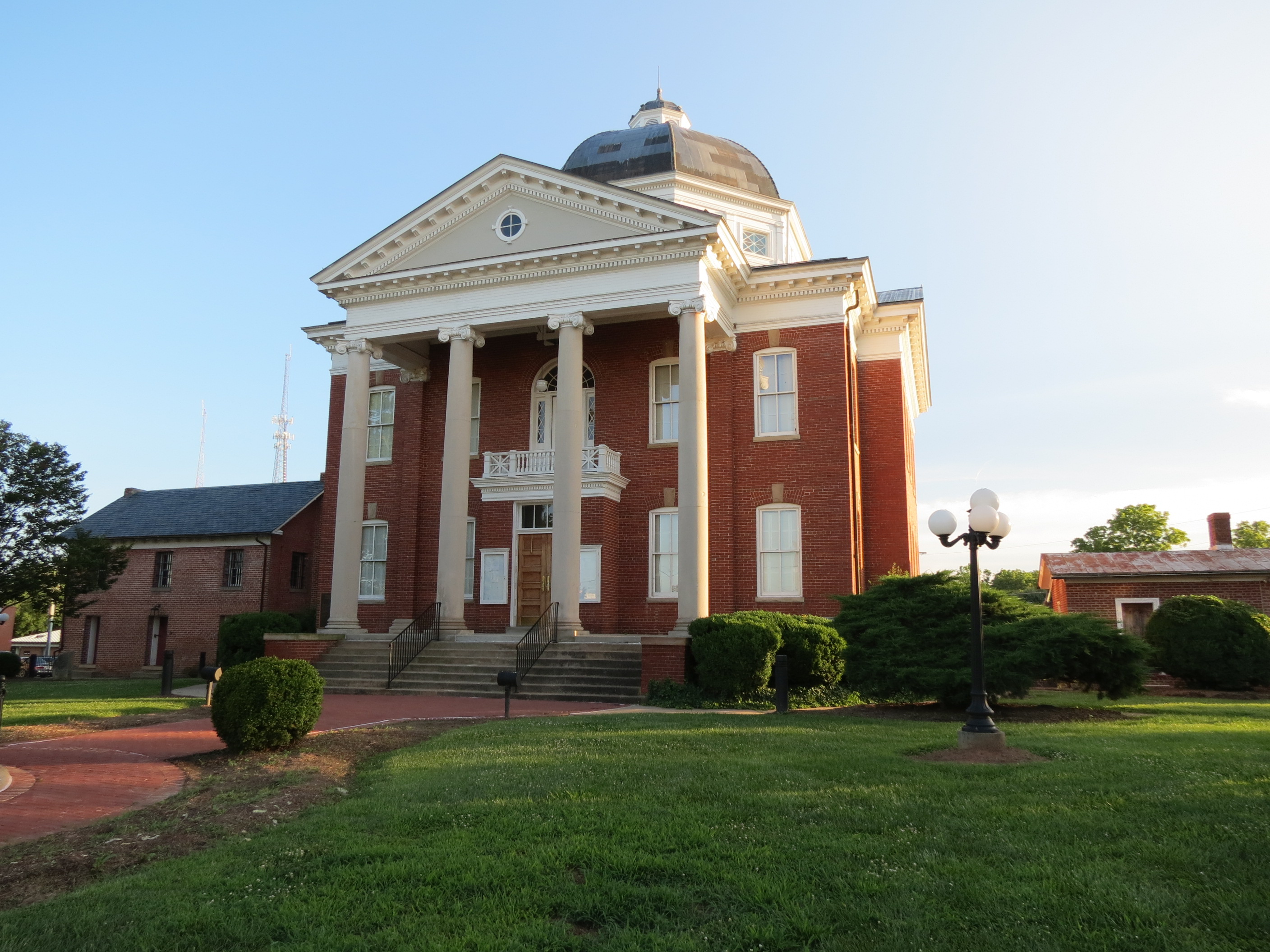
The historic courthouse and jail to the left. To this day, property auctions take place on the steps.

This courthouse is a bit later, but Louisa’s major claim to fame is that Patrick Henry began his law career here (his first big case was part of the lead up to the Revolution, when King George vetoed a Virginia law in question which the colonists saw as an overstep into their legislative authority. The rest is, extremely well recorded, history). Later he was elected to the Virginia House of Burgesses to represent the county, where he kicked off his political one.

IMG_0268

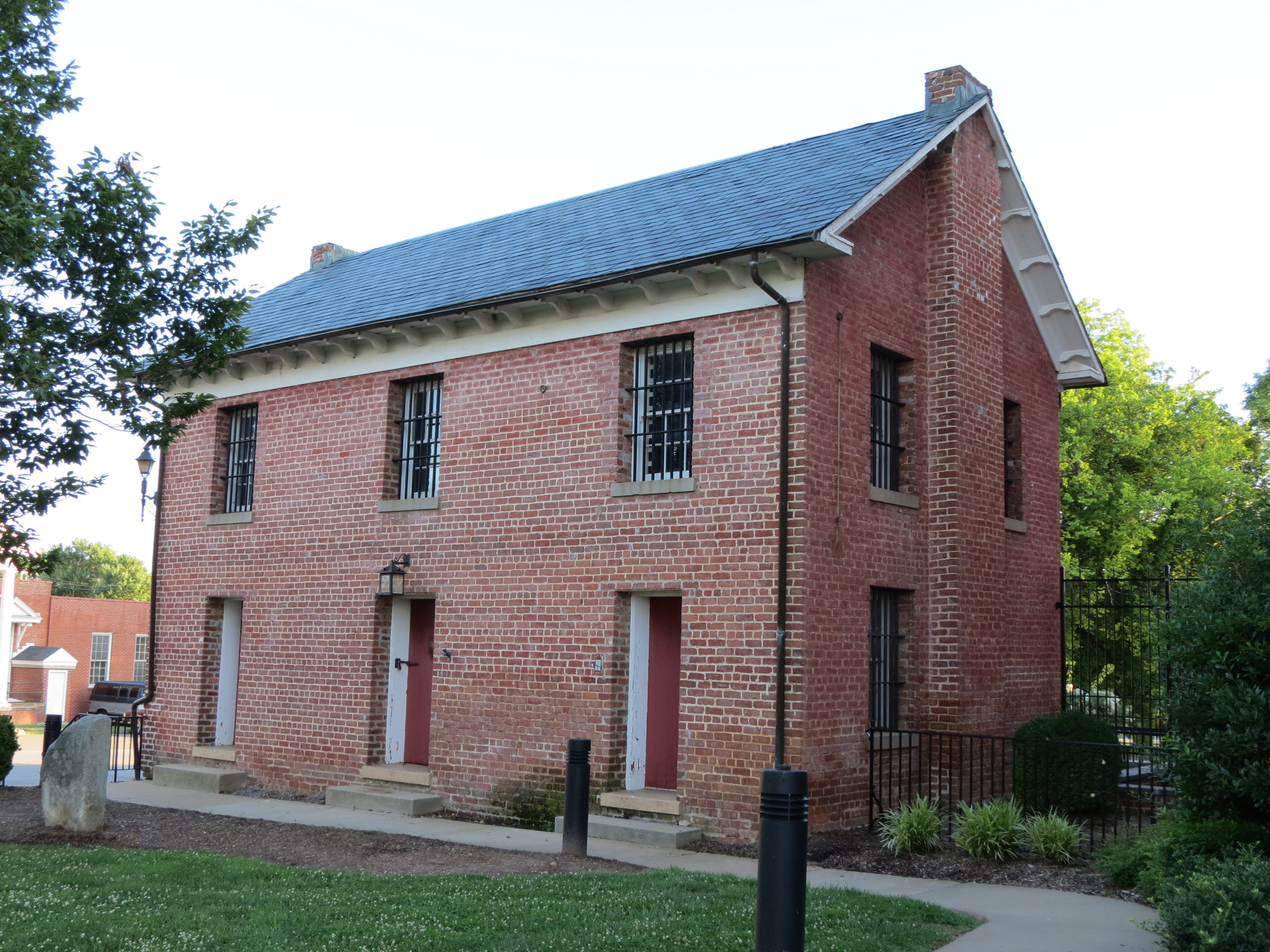
The jailhouse which operated into the early 20th century and was apparently ranked as one of the worst in the country – because in its long history, it wasn’t renovated in any significant way. Rustic charm is all well and good, but not when you’re locked up, apparently. It’s a pretty good representation of 19th century local justice.

IMG_0271

Typical local hours. Very few things can afford to be open all day, every day around here.

IMG_0272

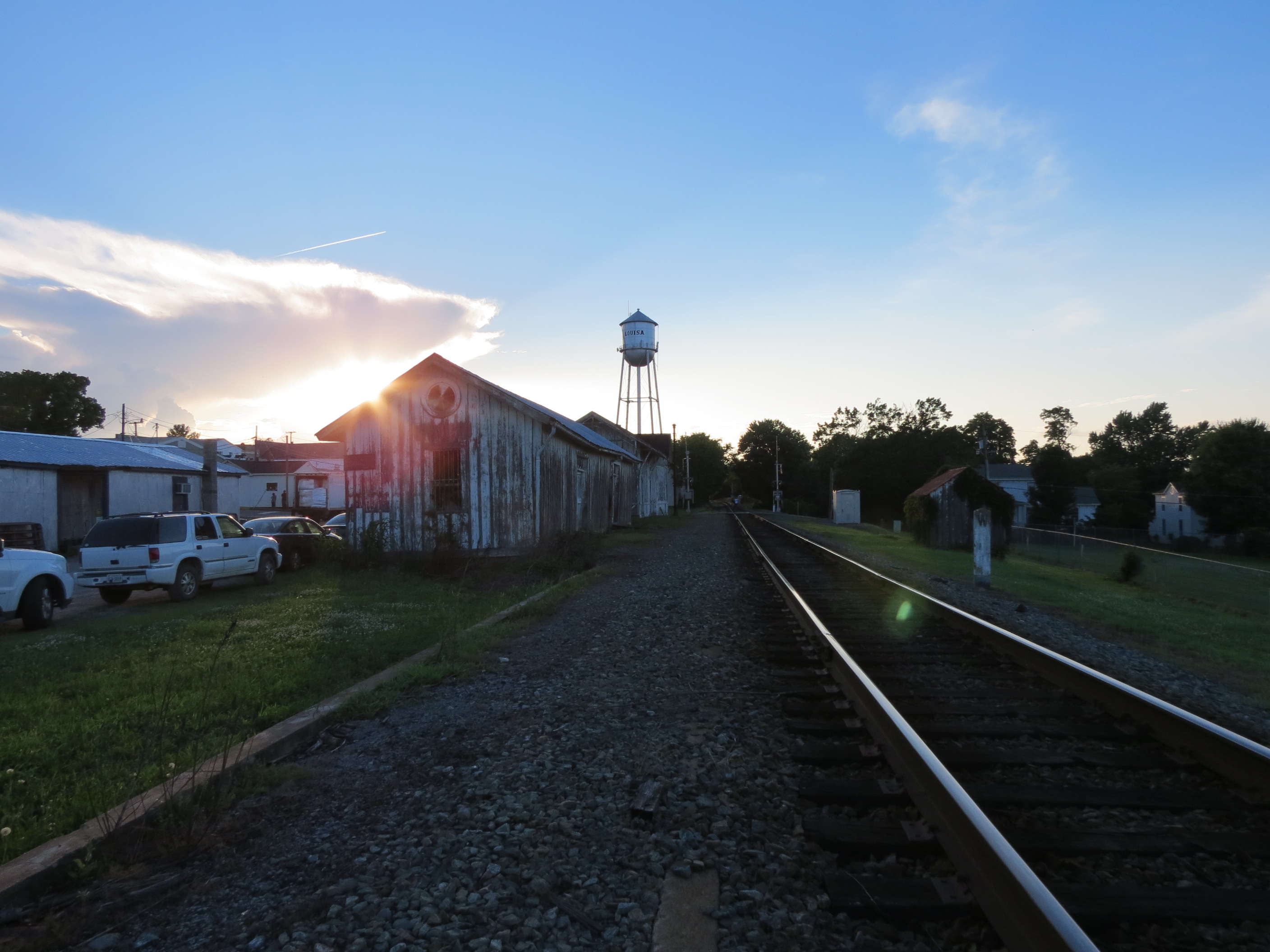
During the Civil War, the railroad was a major Confederate supply line, meaning that battles were fought all over the place. The railroad was also supposed to bring a degree of prosperity that, unfortunately, didn’t really make it into the 20th century. The rail station on the left has beautifully worked gables and was clearly once quite nice, but now it’s boarded up and empty except when the local feed store uses it for storage.

IMG_0279

Meet Cuckoo

“There are no rules of architecture for a castle in the clouds.”
― G.K. Chesterton

Oh hello Federalist-style-house, lover.

IMG_0283

I do love red brick colonial!

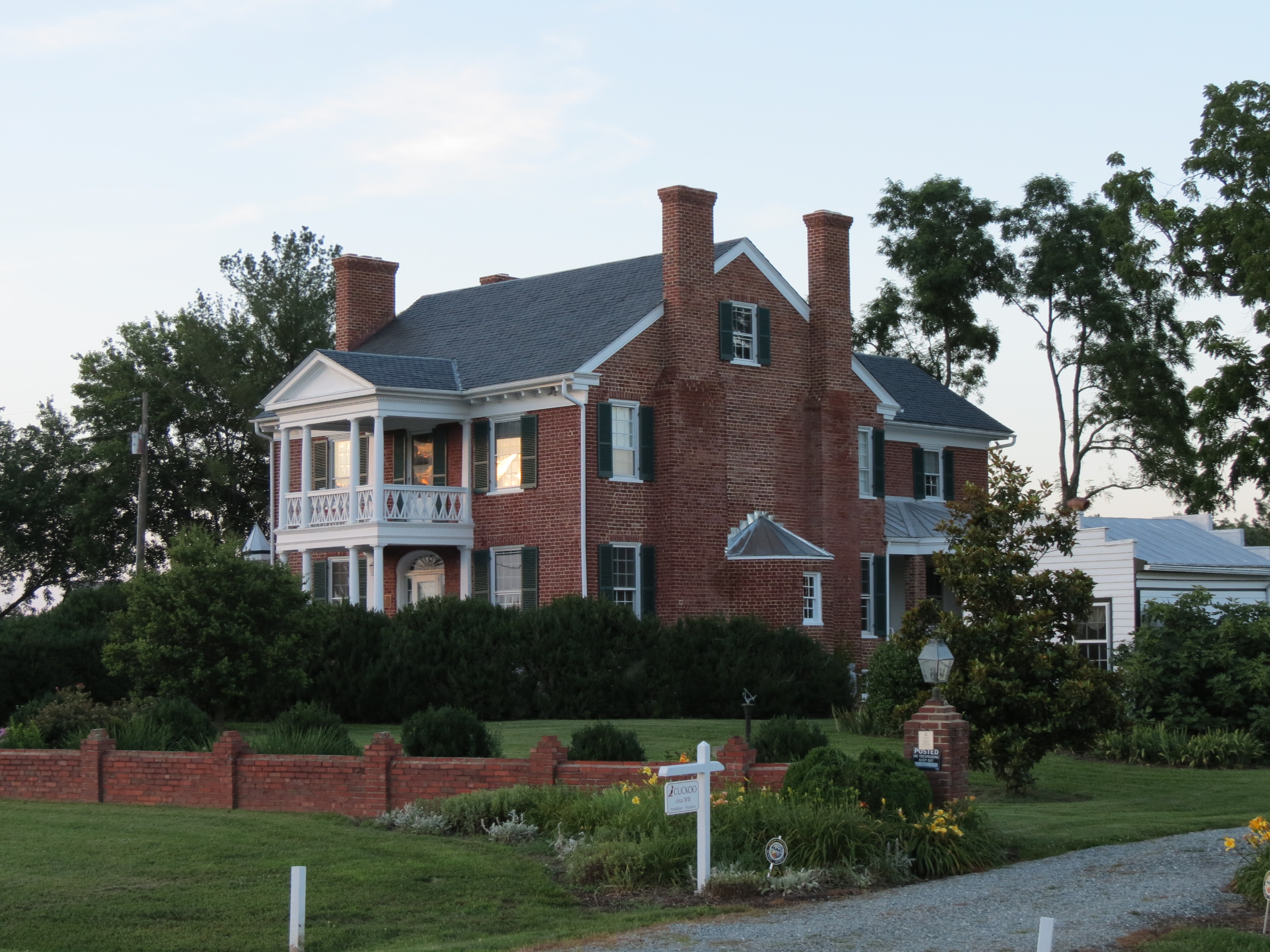
This beauty is Cuckoo, a local landmark for nearly two centuries now, and more or less site of where Jack Jouett set off on his famous ride. He’s considered the Virginian Paul Revere who rode to warn then Governor Thomas Jefferson that the British were coming…to capture the entire state legislature. The British were led by this guy, who aside from a banner British name, was so ruthless that he was in the inspiration for the villain in the Mel Gibson film The Patriot (the one who more or less slaughters an entire family in slow motion. Also played by Ciaran Hinds opposing the slave trade in Amazing Grace – clearly a nasty fellow all around). So, well done there. We wouldn’t have wanted Tommy J. to tangle with him.

IMG_0282

Like every other old house in the area, it was a work in progress, and additions were added as needed by the family.

IMG_0286

You can’t take two steps in this county without tripping over one of these historical markers. The area is lousy with Revolution and Civil War placards. It’s a historical infestation – the one vermin you welcome!

all images my own

Past Education

“Wisdom is not a product of schooling but of the lifelong attempt to acquire it.”
― Albert Einstein

Want to see a typical schoolhouse for most of rural America for the better part of two centuries? Brace yourself:

IMG_0280

That thing is, no exaggeration, smaller than most garden sheds I’ve seen. I went to high school in what used to be a WWII weather station, graduating class of 60 students max. Tiny by most suburban measurements (Jeff, for example had a graduating class bigger than my entire school combined). And even I can’t even wrap my head around school in a closet.

Nomenclature

“Puritanism.  The haunting fear that someone, somewhere, may be happy.”
– H.L. Mencken

Recently, for reasons far too ridiculous and complicated to explain, Scarlett and I have a bit of an inside joke ending emails and phone calls with some sort of admonition followed by, “or God will smite thee.”  Have a good day, or God will smite thee, etc.  It’s silly and stems from a midnight conversation when her flatmates were getting drunk and crowding up her New York flat so she hung out in the hallway and called me up to chat until they descended on Greenwich Village.   Many an inside joke has found it’s birth in such events.

Anyway, it put me in a sacrilegious frame of mind, so these Puritan baby names made for a good Friday afternoon read.  Let’s have a look at some of these poor parenting choices and make a few guesses on how the Early Modern era panned out for them, based on their unfortunate epithets:

I disapprove strongly of this frivolity.

Wrestling Brewster, I can only surmise, turned out to be the dame school class bully.

Kill-sin Pimple, to no one’s surprise, ran off to live in the woods and found happiness among the Iroquois.

Continent Walker, a great colonial explorer.  Annoyed his relatives by insisting on dressing “in the manner of the heathens” in the privacy of his own home.

Preserved Fish refused all pickled food for the entirety of her life.

Anger Bull was unfortunately prone to fits of rage at the sight of red flags.  Laudanum helped.

Magnyfye Beard was appropriately enough, one of history’s earliest hipsters.  His whiskers were the pride of the early cavaliers.

Hope-still Peedle.  Pessimist.

Weakly Ekins: picked on in school.  Probably by Wrestling Brewster.

If-Christ-had-not-died-for-thee-thou-hadst-been-damned (known familiarly as “Dr. Damned”) Barebone, never really understood why his medical practice never did very well.  Scraped by as a body snatcher for the burgeoning field of anatomy and made many, sadly unrecognized, contributions to science.

Let’s play a game: pick a name, submit their life story in three sentences or less.  Winner get applause and acclaim from the minion coterie.  Off you go.  (Or God will smite thee!)

Ten Years On

Whoever fights monsters should see to it that in the process he does not become a monster.  And when you look long into an abyss, the abyss also looks into you.
– Friedrich Nietsche, Beyond Good and Evil

In 2001 my family lived on an American military base on a godforsaken little island in the middle of the Pacific ocean.  The joys of government service, n’est pas?

My day began at 4:30am when I and two other kids attended an early morning meeting for teenagers.  Only one of us had a driver’s license so we carpooled together to this meeting, back again to catch a bus at 6:30.  The island was tiny but the roads were so bad that it took over an hour to get just 30 miles to our school.  I got out of school at 2:30pm, then had soccer practice until 5pm, and then back onto the bus for a ride that zigzagged back home and took longer than the initial ride to school did.  I stumbled through the doors sometime between 7 and 8pm, did homework, and fell into bed.  I was a shockingly well behaved teenager, but in retrospect that might have been because I was consistently exhausted.

September 11, 2001 didn’t start out too differently.  That morning I climbed yawning into the car and the three of us drove off to our meeting.  As we passed through the gates we noticed far more men in camouflage than usual, but chalked it up to some sort of training exercise and weren’t too alarmed when the heavy bars slid shut behind us.

But when we got to our destination, the youth leader was standing outside her car.  Shivering.  On a tropical island.  The three of us braced for bad news, but even we weren’t prepared to be told that the United States had apparently been attacked.

Remember, we lived on a base and our parents were employed in the military  or government of various countries.  A million thoughts ran through my head: Are we at war?  Will my family be separated?  Will they send me and my siblings away?  Is it even safe to travel?  We have dozens of planes and ships stationed here – are we a target?  And then, finally, how will I get home?

We weren't let off the base for days. And those of us who didn't have work to distract us watched this, over and over again, for a week.

It turns out that the base had utterly shut down, we could get off, but they weren’t letting anyone back on.  But we had a secret weapon, my Dad’s considerable rank.  We called him and he escorted us on base, and when we were stopped at the gates and denied entry, my usually mild mannered father snapped, “This is my daughter and she is coming in.”

That was when the fear really hit me.

10 years later that fear has actually largely dissipated.  The world is the way it is.  The nature of my father’s profession meant that we were frequent travelers and though the fear of terrorists never stopped me from getting on a plane, it would a lie to say that it never intruded on my travel thoughts and plans.    I grew up in government and military circles which has meant that for the past ten years much of the people I knew were at war or at least directly affected by it, and not in ways confined to CNN or BBC news blips.

And now, 10 years later, the man who largely masterminded that day is dead.

It’s odd, especially since our hatred and fear of him has cooled somewhat.  Mine has anyway.  We’ve had other things to think about.  Recessions, booms, elections, family, going to university, getting married, finding a job, etc.  My life moved on while he hid in a mountain somewhere, hiding from half of the world and shunned even by some of his former allies who found that supporting him came at too frightening a cost (“Yes, of course we’re still pals, Osama, but the tanks are really mucking up the neighborhood so we’ll have to see less of each other…”). 10 years later an uprising of people, largely my age, overthrew tyrannical governments in his area of the world, or are still struggling to do so.  They are the post 9/11 generation too.

Part of me thinks he should have had a trial and be made to face his victims.  Part of me thinks that you can’t make a man who believes with all his soul that his vendetta of violence and blood is good realize that it is evil, no matter how many witnesses you call.  Part of me thinks an assassination is a cowards way out, and part of me is fiercely glad he wasn’t treated like a leader or military commander but as the rogue operative he was.  And part of me wonders if a man like him actually dies – he’s at the bottom of the sea, but his network is thriving and hate and ignorance are still winning in many parts of the world.

Frankly, happy in many ways as I am (and isn’t that an odd thing, to be happy because one man in six billion is dead!), it’s odd to live in a world without him.  He epitomized treachery and evil, now he is gone.  But not really.   He is dead, his ideology is not.

History Nerd Chortle

“I have not always in my dealings with General de Gaulle found quotations from Trafalgar and Waterloo necessarily productive, and he has been very tactful about the Battle of Hastings.”
– Harold Wilson

Apparently there is a particular zoo in Germany housing a penguin by the name of Bonaparte.  He has, against all the rules of biology, genetics, and common sense, fallen in love with a black and white Wellington boot.

An event only the truly nerdiest of history nerds can appreciate.

First Battalion, King's Own Penguins advance!

Happy V-Day, Kittens

“It is plain that men are in charge of making saints.”
– Karen Cushman, Catherine Called Birdy

How to properly celebrate St. Valentine’s Day:

Also, build yourself a cathedral if you can, it adds swagger points.

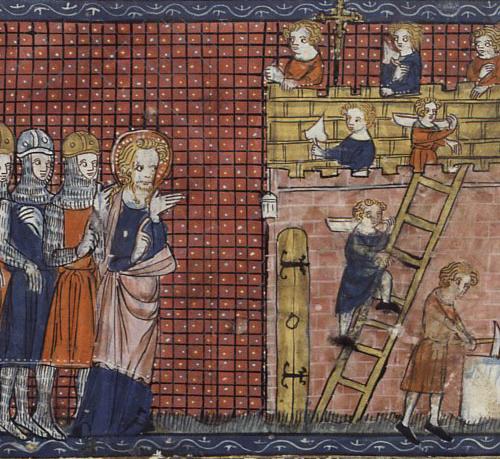
1) Be a Roman priest during the reign of the Emperor Claudius Gothicus (because that name definitely belongs to a benevolent, wise, un-tyrannical autocrat), perform marriage ceremonies for Christians, get caught, and when on trial foolishly try to convert said unfortunately named emperor.  Survive a terrific beating, stoning, and finally die when guards run out of ideas and behead you.

1a) Or maybe be an early Christian convert who gets martyred (like they tended to do), but be fuzzy on the actual death details (also like they tended to do).

1b) Or finally be an obscure early Christian hermit who, neglecting utterly to conform to the social expectations of the time, failed to be martyred at all.

2) Fade into even more complete obscurity

3) Have Chaucer casually mention the tradition that February 14th is the day that birds choose their mates and forever after be associated with romance and love.

4) Stew for nearly another 700 years and enjoy the romance, kids!

Words That Bug Me, And Will Now Bug You

“I personally believe we developed language because of our deep inner need to complain.”
– Jane Wagner

We all have word pet peeves, times when people use phrases incorrectly, insert words that don’t actually mean what they think it means, or when society at large is responsible for corrupting a word’s usage.  I probably take my particular pet peeves too seriously, but it cannot be helped.

“Ironic” – which does not mean unfortunate, coincidental, silly, funny, aggravating, or any of the other things Alanis Morrissette can now be blamed for teaching us to think it means.

An excellent example of common modern usage.

“Ye”- as previously mentioned, anytime you see a sign showing “Ye Olde [something], you’re not actually looking at a “y” but at an Old English character called “thorn” which makes a “th” sound.

This confusion is somewhat understandable as it is most commonly found in England where several linguistic invasions have made the language something of a puzzle for most who try to learn it as a second language.  Pear, pair, and pare, you try explaining that one.  Or the reason knight isn’t spelled night, when in other words a “gh” produces and “f” like in laugh.  Or why, depending on where you’re from, you may spell civilisation as civilization.  Or why English doesn’t really have rules, only exceptions.

First the Celts came to Britain, after possibly conquering another group of people who were there first, and as far as we know didn’t have much in the way of writing.  There are some hatch mark symbols carved in stone but these seem to have been a clumsy, tedious sort of way of keeping track of things and so they decided instead to rely on memory which they trained to fantastic levels (and where did you leave your keys this morning?).  Then came the Romans who brought Latin and other previously unknown practices (see Decimate below).  But then their empire, as it had become by this time since they’d given up most pretensions to a republic, caught a nasty case of “The Collapsings” and the legions were recalled from Britain, leaving the Romanized population unprotected and understandably miffed.

I think it's time for a trade up, lads!

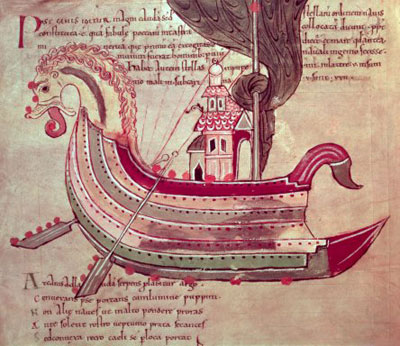
The Anglo Saxons (go here and carefully note the caption!), watching this from their Germanic homesteads with glee, could see an upwardly mobile real estate deal when it presented itself, so bunches of the upped sticks and sailed over.  They originally were hired as mercenary protectors by the Britons, but they didn’t go in much for togas compared to rape and pillage and within a few years had taken over and set about to dividing into small kingdoms and declaring war on each other to their hearts’ content.  They also brought their language, on which somewhat better records were kept.  A few centuries later, just as soon as they’d got themselves unified into some semblance of order and had started keeping excellent chronicles, a Norman across the Channel decided he ought to be king.  William the Bastard, for that was his unfortunate name,  invaded and won.  He ousted the Anglo Saxon lords and installed his own Old-French-mixed-with-Latin-again speaking cronies instead, further enriching the language and changing his name to the much more impressive sounding William the Conqueror.

But, in spite of each subsequent invader’s attempt to quash the language of those who came before, the invaded stubbornly held on to an impressive lot of their old languages and culture, which is why something as old as a millennium old written character that looks like “y” and sounds like a “th” is still bulldogish-ly refuses to go away.  Which is good because “Yee old [anything]” sounds absolutely ludicrous.

Apostrophe – I know this isn’t a word, but you know what I mean.  People will throw this little mark wherever they think something should go, but for the life of them don’t know whether it’s a different spelling, contraction, or trying to show possession.

There/Their/They’re – And while we’re on the subject!  These are totally different words, figure ’em out!

Had this been painted a week earlier, it would have depicted the farmer's wife and children still alive. One must admire his optimism here, yes?

“Medieval” used when people mean backwards.  Actually refers to a distinct period in Western history which was complex, interesting, and full of people trying desperately to push their way forward out of the mess that Rome put them in after dividing, collapsing, and embarrassingly allowing itself to be ripped to shreds by barbarian hordes.  Western standards of music, culture, and literature were developed during this period.  Architecture, which had become an utterly lost art  was redeveloped literally from the ground up.  The ideas of credit, and banking were invented.  The whole period is a heartening example of human beings being knocked into the sludge over and over again with invasions, plagues, more invasions, famine, and a couple of other invasions, and consistently picking themselves up, dusting off the disease and gore, and getting back to the difficult business of human advancement.

Irregardless – This is not, in fact, a word.  At all.  Don’t use it.  Ever.

“Decimate” – Once upon a time, there was an empire that was cheerfully burgeoning in the centuries BC.  Not that they called themselves an empire, oh no!  That would have sounded barbaric and unenlightened.  They called themselves a Republic, the Roman Republic to be exact, and since they were so enlightened and grand, the ideal career for a spry, young Not-Empire was to invade all their nearest neighbors and force them to submit to their rule.  Really there were few things this adolescent Republic liked better than sauntering into Germany, Greece, or North Africa and casually killing a few thousand people before breakfast.

"Tough luck, Flavius." "Son of a Gaul!"

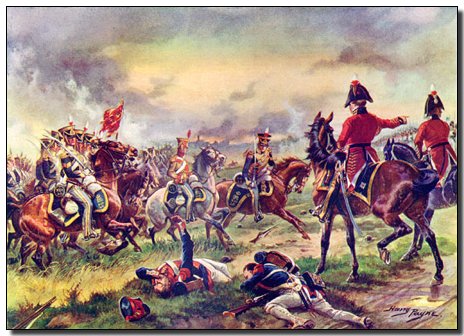
Not content with brutality directed at the unwashed masses they were trying to subdue (so that they could tax and enslave the snot out of them), occasionally when one of their vicious battalions mutinied or were insufficiently enthusiastic about marching off to slaughter, the commander would order them decimated.  Meaning that they would be divided into groups of ten, draw lots, and whichever one of them pulled the short straw was stoned or bludgeoned to death.  Literally it meant to reduce by one tenth.

Nowadays, the term decimation is used, completely at odds with its origin and etymology, to mean when people, places, or structures are reduced by cataclysmic proportions (although the American media is prone to exaggeration in this regard: “That windstorm last night decimated trees and power lines!” for example, when maybe one or two were knocked down).  Decimated does not mean destroyed, wiped out, broken, mildly damaged, and dirtied up.

“Like” – “It was, like, so hard!  I mean, like, I’ve never had to do anything that bad since, like, I had to pick out my, like prom dress!”  The word “like” means similar to.  Or fond of.  It can be used as a conjunction, verb, or adverb, it is NOT an equivalent to “um…”